
Sun-induced dark spots, which may also be known as “sun spots”, are a common skin concern that many people experience as they grow older. They commonly appear on the face, and can also appear on the arms and legs and other sun-exposed parts of the body. While harmless, they can have an impact on confidence and self-esteem.
What are sun spots?
Sun spots, also sometimes referred to as ‘age spots’, are small, flat areas of skin that appear darker than the surrounding area. They range in color and may appear brown on those with lighter skin tones and black on those with darker skin tones.
Sun spots tend to appear on areas of skin that are most exposed to sun, such as the face, backs of the hands, and extremities1.
If you are concerned about any dark spots on your skin, be sure to consult with a dermatologist for further advice.
Are sun spots the same as freckles?
While sun spots may look like freckles, they have some key differences2:
- Freckles are generally lighter in color than sun spots and are more apparent at a young age
- Sun spots are generally larger than freckles, darker in color, and appear in adulthood
- Freckles may be more prominent during warmer months and fade during times of year with less sun exposure, whereas sun spots do not fade during any season
What causes sun spots on the face?
Overexposure to UV light causes sun spots on the face.
Sun exposure
Sun spots on the skin are mainly caused by sun exposure. Exposing the skin to UV rays by using tanning beds and tanning lights can also cause and increase the risk of sun spots3.
If skin is exposed to too much sun over a long period of time, it can become damaged and respond by creating sun-induced dark spots.
Aging
While sun exposure is the main factor behind sun-induced dark spots developing, age is also a factor, as sun spots are most common in adults over 402. As skin naturally ages, it can develop an uneven skin tone because the skin’s ability to repair itself and resist UV damage diminishes over time4.
Can you get rid of sun spots?
Unfortunately, sun spots do not naturally fade or go away. There is no way to completely get rid of sun spots, but there are ways that you can help reduce their appearance.
Skincare for sun spots on the face
You can manage existing sun-induced dark spots on the face with skincare products specially formulated to support skin experiencing dark spots caused by sun exposure.
Eucerin®’s Radiant Tone line features skincare products formulated with ThiamidolTM* to help visibly reduce the look of dark spots caused by the sun, aging, and imperfections.
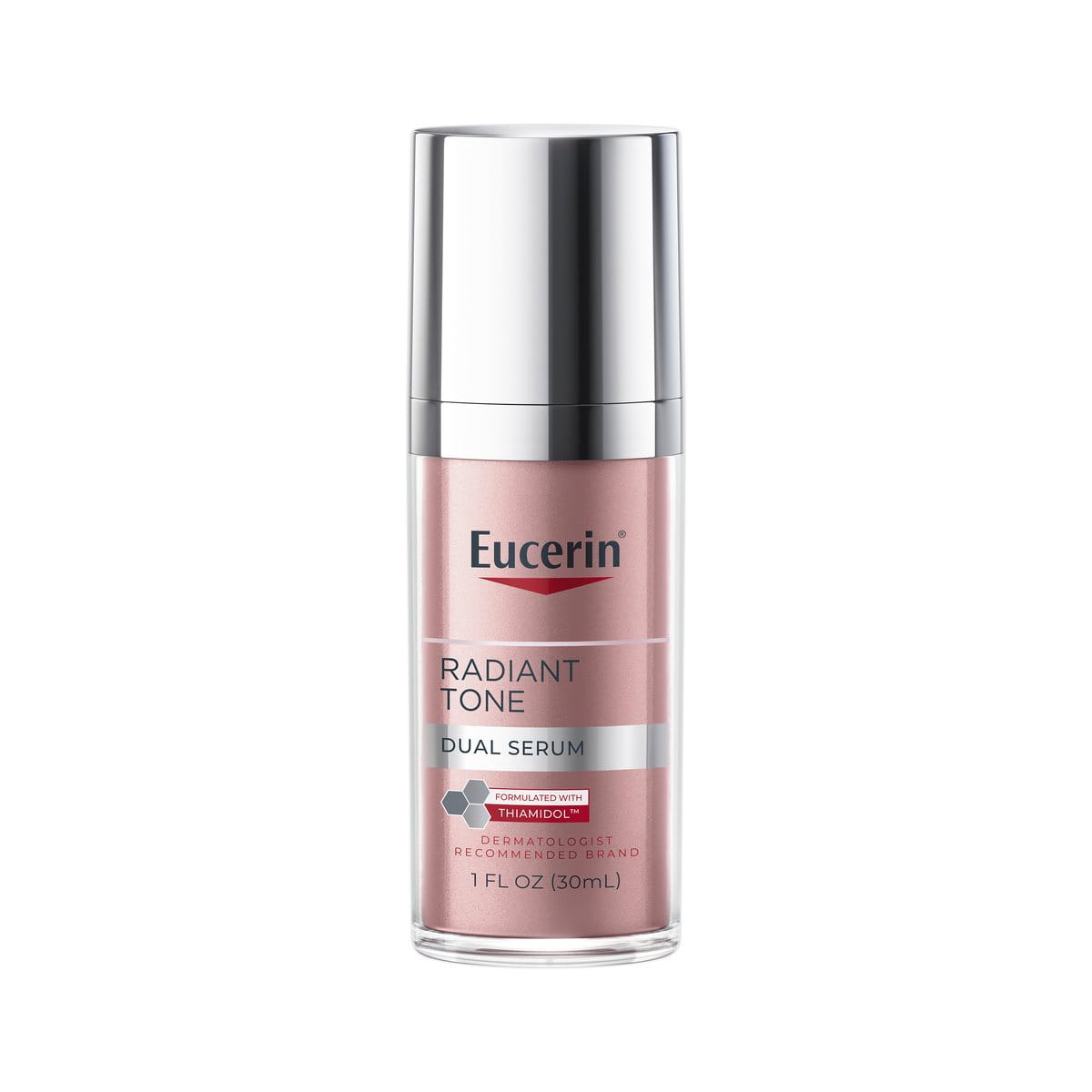
Eucerin® Radiant Tone Dark Spot Corrector Dual Serum addresses the look of dark spots due to sun exposure and aging as well as uneven skin tone, dullness, and lack of radiance. Enriched with ThiamidolTM, Hyaluronic Acid, and Licochalcone A, this serum is appropriate for all skin types and can be used day or night. This dark spot serum visibly reduces the look of persistent dark spots due to aging and sun exposure and provides a more radiant appearance with regular use.
*Excludes Radiant Tone Cleansing Gel
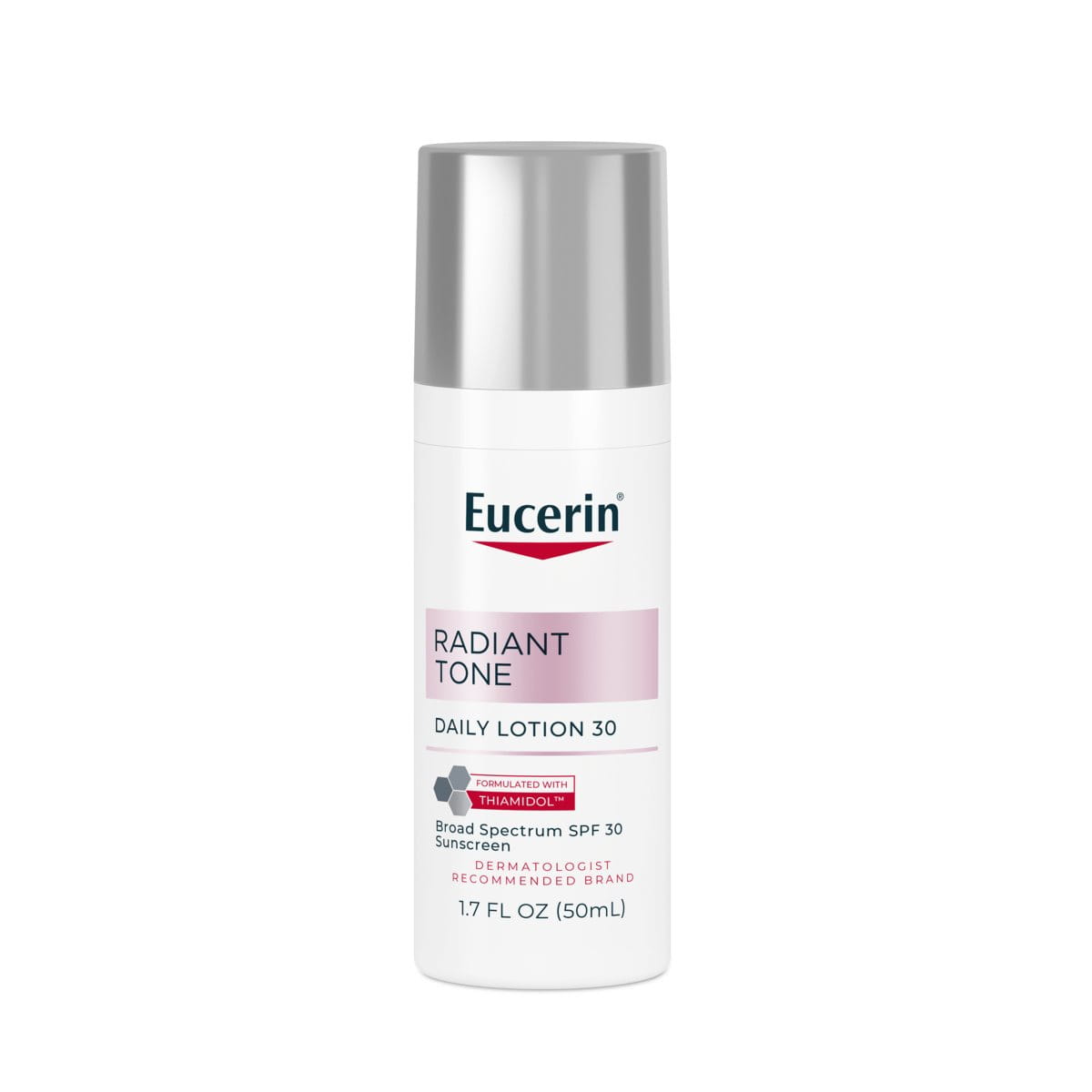
After using the serum, for your daytime skincare routine, apply a daily moisturizer. Eucerin® Radiant Tone Daily Lotion with Broad-Spectrum SPF 30 Sunscreen helps address dark spots due to sun exposure, imperfections and aging, and can improve skin’s radiance in as little as 2 weeks. With regular use, this daily lotion with SPF 30 diminishes the look of persistent dark spots due to sun exposure, imperfections and aging, and helps prevent their reappearance when used as directed along with other sun-protection methods.
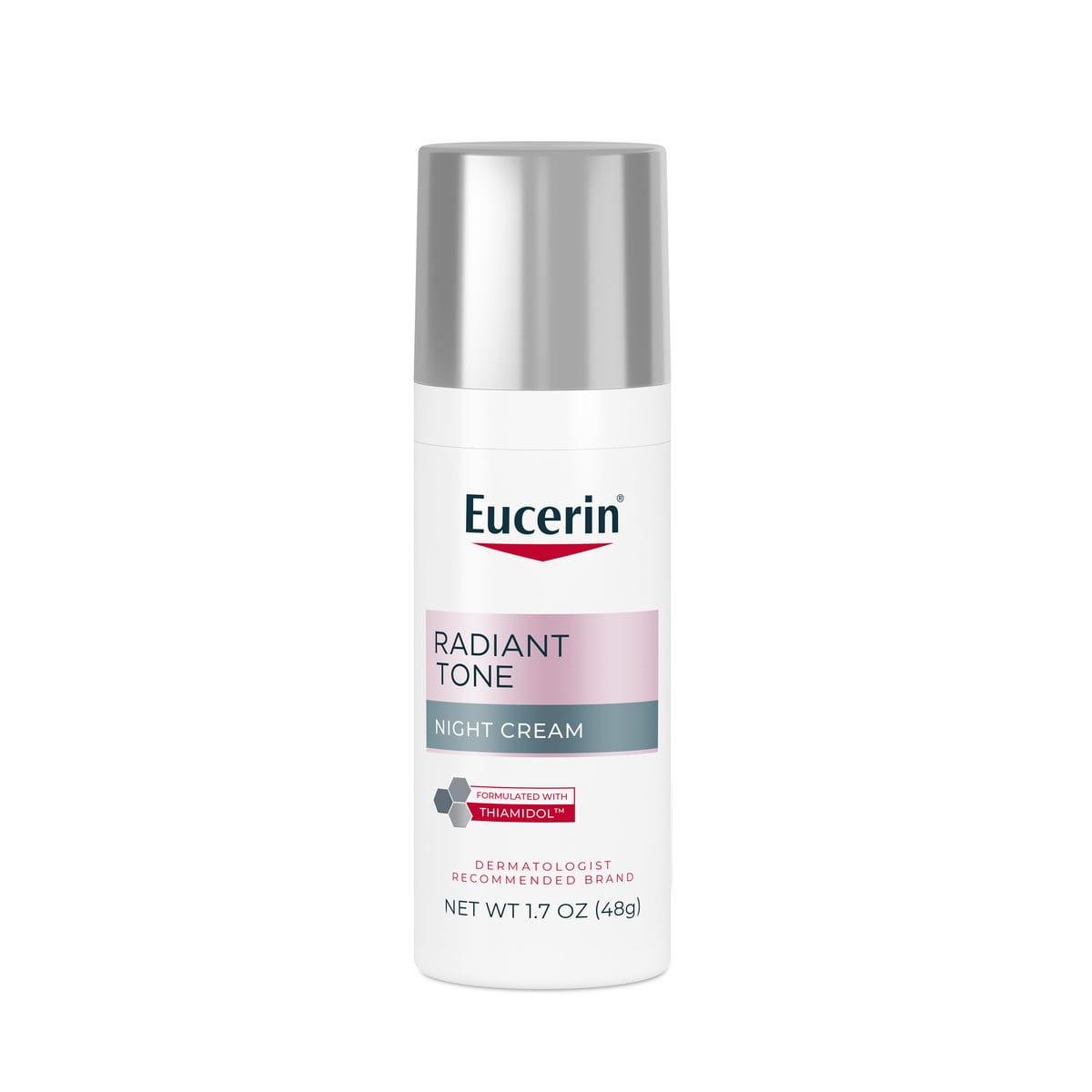
For nighttime moisturizing with the added benefit of helping to reduce sun-induced dark spots, try Eucerin® Radiant Tone Night Cream. This night cream formulated with ThiamidolTM helps to visibly reduce the look of dark spots due to sun exposure, imperfections, and aging while you sleep. Applying before sleeping can help support a visibly renewed appearance and restore skin’s radiance, helping to maintain even-looking skin with regular use.
Help prevent sun spots with proper sun protection
As sun spots on the skin are mainly caused by prolonged, unprotected sun exposure, protecting skin from the sun’s harmful UV rays is an important way to help prevent sun spots from forming.
Use a daily broad-spectrum face sunscreen
Did you know that your skin can experience sun damage even on overcast days? This is why it’s important to wear sunscreen every day, even when it’s not hot and sunny outside, to use the correct amount, and to apply and reapply sunscreen regularly according to the package instructions.
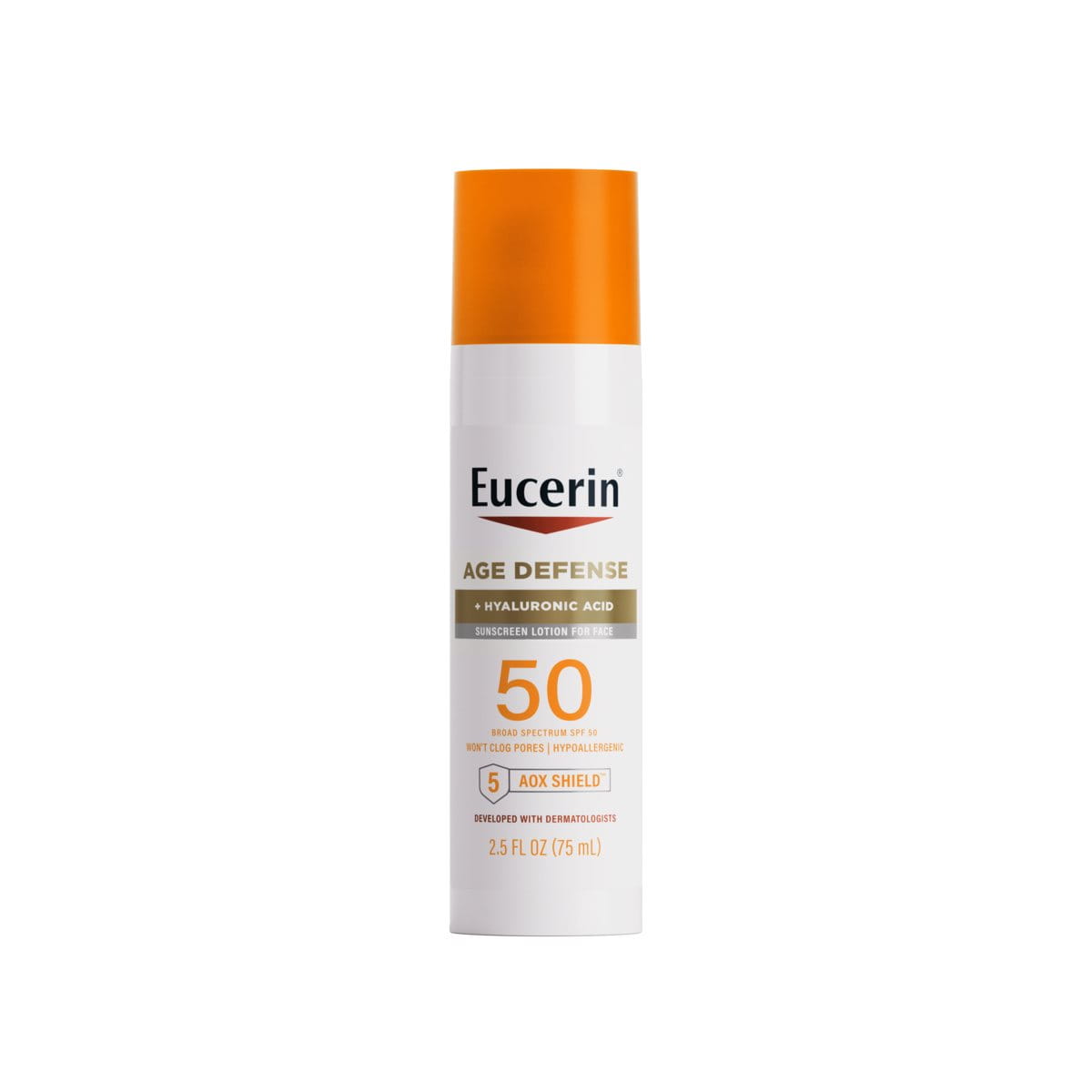
Eucerin®Age Defense SPF 50 Face Sunscreen features a formula with 5 AOX Shield™, providing broad spectrum SPF 50 UVA/UVB sun protection and defense against long-term sun damage.* Its advanced formulation enriched with hydrating Hyaluronic Acid helps to visibly reduce the look of fine lines and wrinkles**, and is suitable for daily use—alone or under makeup—to provide hydrating sun protection
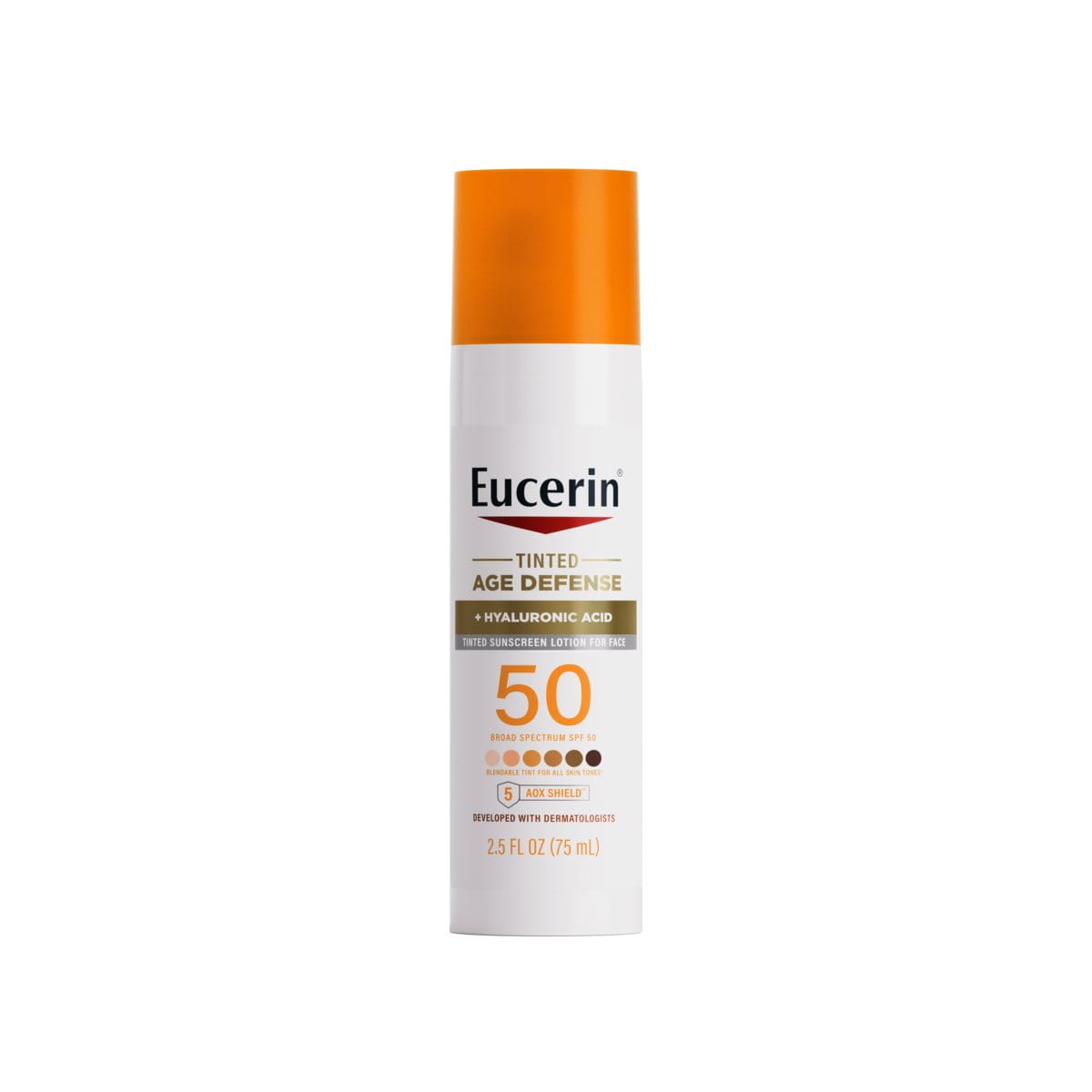
This sunscreen is also available in a tinted formula with a blendable tint for all skin tones, and a sheer finish for more even-looking, radiant skin.
*Use and reapply as directed with other sun protection measures (see Drug Facts Box).
**With continuous use after 1 week. Use as directed (See Drug Facts Box).
Other sun protection measures to help prevent sun spots
In conjunction with using the right sunscreen for your skin’s needs, it’s important to take additional sun protection measures to help reduce the risk of developing sun spots. Other sun protection measures include:
- Wearing protective clothing when spending time outdoors, such as long pants, long sleeves, hats, and sunglasses
- Avoiding direct sun exposure during peak hours of the day
- Seeking shade when spending time outdoors
- Following your sunscreen’s directions for application and reapplication, being sure to reapply after swimming or sweating
When to be concerned about sun spots
Sun spots are very common with age and are darkened areas of skin caused by sun exposure. However, if you notice any new marks on your skin, or if spots have uneven shades and colors or change shape or size, be sure to contact a dermatologist for further guidance. Sun exposure is linked to skin cancer5, so it’s important to get any skin concerns addressed by a medical professional annually.
Managing sun spots on the face with Eucerin®
By following proper sun protection protocols and using a broad-spectrum facial sunscreen like Eucerin® Age Defense SPF 50 Face Sunscreen, you can have fun in the sun while knowing you’re protected from up to 98% of the sun’s harmful UV rays6.
For skin that is experiencing sun-induced dark spots, Eucerin® Radiant Tone products formulated with ThiamidolTM can help visibly reduce the look of sun spots with regular use, using as directed. Note: limit the collective use of Radiant Tone products with ThiamidolTM to four times a day. For best skin compatibility, use products from the Radiant Tone collection. Do not use on irritated skin or active acne breakouts.
The information provided herein is not intended to be medical advice. Nor is it intended to treat the underlying skin disease or condition. The information is provided for educational purposes only on the benefits of sunscreen usage and how to help:
- Moisturize, soften and smooth dry skin
- Improve the appearance of the skin
- Achieve healthier-looking skin
Sources:
- Mayo Clinic. Sun damage. Mayo Clinic. https://www.mayoclinic.org/diseases-conditions/sunburn/in-depth/sun-damage/art-20546834.
- Cleveland Clinic. Freckles: What They Are, vs. Moles, Causes & Removal. Cleveland Clinic. https://my.clevelandclinic.org/health/articles/23091-freckles.
- American Academy of Dermatology Association. 10 surprising facts about indoor tanning. www.aad.org. https://www.aad.org/public/diseases/skin-cancer/surprising-facts-about-indoor-tanning.
- Skin Cancer Foundation. The Sun Keeps Rising: Why Seniors Can’t Skip UV Protection - The Skin Cancer Foundation. The Skin Cancer Foundation. https://www.skincancer.org/blog/the-sun-keeps-rising-why-seniors-cant-skip-uv-protection.
- American Cancer Society. Does UV Radiation Cause Cancer? | American Cancer Society. www.cancer.org. https://www.cancer.org/cancer/risk-prevention/sun-and-uv/uv-radiation.html.
- George, S. 8 common SPF questions, answered. MD Anderson Cancer Center. https://www.mdanderson.org/cancerwise/what-spf-should-i-use.h00-159776445.html.
Our brand values

Pioneers in skincare
We deliver a holistic approach to help keep your skin healthy-looking and radiant.

Committed to innovation
For over 100 years, we have dedicated ourselves to researching and innovating in the field of skin science. We believe in creating active ingredients and soothing formulas with high tolerability that work to help you live your life better each day.

Recommended by dermatologists
We work together with leading dermatologist and pharmacist partners around the world to create innovative and effective skincare products they can trust and recommend.