
When it comes to having eczema-prone skin, there are a lot of different terms you may hear when examining your symptoms – atopic dermatitis, contact dermatitis, eczema, atopic eczema, and more. It can feel overwhelming trying to decipher what each thing means and how it might impact your skincare routine. Read on to learn more about eczema, atopic dermatitis, and how to care for eczema-prone skin with Eucerin.
What is eczema?
According to the National Eczema Association, “Eczema is the name for a group of inflammatory skin conditions that cause dry skin, itchiness, rashes, scaly patches, blisters and skin infections.”1 This group of skin conditions consists of seven different subtypes that all live under the bigger eczema umbrella.
Eczema is common, affecting more than 31 million, or roughly 10% of the total population, of Americans2. While eczema is more common in children, it can affect people of any age, and it is not contagious.
Eczema is common, affecting more than 31 million, or roughly 10% of the total population, of Americans2. While eczema is more common in children, it can affect people of any age, and it is not contagious.
Eczema flare-ups
Eczema goes through phases known as “flare-ups” or “flares” that can last for several days up to several weeks where the skin is experiencing more acute symptoms, and periods in between flares where the skin may have mild symptoms or not be showing any symptoms at all1.
Learn more about what can cause eczema flare-ups and how to manage them.
Learn more about what can cause eczema flare-ups and how to manage them.
Eczema is commonly mistaken for other skin conditions, so be sure to contact a health care provider for proper diagnosis.
While eczema is not curable, it can be managed with various lifestyle adjustments and over-the-counter skincare products, but more severe symptoms may require further medical treatment.
Common eczema symptoms
When people think of eczema, they most commonly associate it with itchy skin. Other eczema symptoms include:
- Dry skin
- Irritated skin
- Rough skin
- An eczema-induced rash
More severe symptoms like redness, inflammation, or crusting can occur1. If you are experiencing more severe eczema symptoms, be sure to consult with a healthcare provider for proper guidance.
What is atopic dermatitis?
Atopic dermatitis is the most common type of eczema3 and is also the most common chronic inflammatory skin disease4, with itching as its most common symptom1. Atopic dermatitis usually begins in childhood, with approximately 80% of people with atopic dermatitis experiencing symptoms before the age of six3, but it can occur at any age.
As with other eczema types, atopic dermatitis also follows cycles of flare-ups and non-acute phases.
As with other eczema types, atopic dermatitis also follows cycles of flare-ups and non-acute phases.
Common atopic dermatitis symptoms
- Itching on affected areas of skin
- Inflamed, painful skin that may redden from irritation
- Dry skin that may have a scaly texture or weep with clear liquid
Is atopic dermatitis the same as eczema?
Atopic dermatitis is the most common type of eczema, but not all eczema is atopic dermatitis.
Other eczema types include contact dermatitis, dyshidrotic eczema, neurodermatitis, nummular eczema, seborrheic dermatitis, and stasis dermatitis. Be sure to contact a healthcare professional to determine if you are experiencing eczema, and if so, what type you have in order to be able to seek proper treatment.
Other eczema types include contact dermatitis, dyshidrotic eczema, neurodermatitis, nummular eczema, seborrheic dermatitis, and stasis dermatitis. Be sure to contact a healthcare professional to determine if you are experiencing eczema, and if so, what type you have in order to be able to seek proper treatment.
What causes atopic dermatitis and eczema?
Different types of eczema may have different causes, and the overarching cause of eczema is unknown1. As different people experience eczema for different reasons, it can be caused by individual factors or a combination of things depending on the person and type of eczema.
Eczema causes
Some common causes of eczema include:
- Genetics/family history of eczema
- Environmental triggers such as certain chemicals, fragrances, fabrics, soaps, pet dander, bug bites, detergents, extreme temperatures or humidity levels5, and more
- Stress
Atopic dermatitis causes
For atopic dermatitis specifically, it may also be caused by the following:
- A weakened moisture barrier on the outside of the skin
- Inflammation caused by an overactive immune system
- External or environmental triggers1 like those mentioned above
- Genetic predisposition – studies have shown that if a parent has atopic dermatitis, it is more than 50% likely that their children will also have it, and if both parents have it, this likelihood rises to up to 80%4.
- Recent studies also suggest that there may be a link between smoking and adult-onset atopic dermatitis4.
Where do atopic dermatitis and eczema typically appear on the body?
Eczema can appear anywhere on the face or body and may be localized or widespread.
For atopic dermatitis, it’s commonly seen on the face as well as folded areas of skin like the inside of elbows and back of the knees, but it can also appear on the hands, and anywhere on the body6.
For atopic dermatitis, it’s commonly seen on the face as well as folded areas of skin like the inside of elbows and back of the knees, but it can also appear on the hands, and anywhere on the body6.
Can you get atopic dermatitis or eczema on your face?
Yes, eczema commonly flares up on the face and can cause dryness, itchiness, and flakiness on facial skin7.
Learn more about how to manage facial eczema with Eucerin.
Learn more about how to manage facial eczema with Eucerin.
How to help treat eczema symptoms
As mentioned above, eczema is a chronic condition that unfortunately cannot be cured, but it can be managed in order to help reduce the frequency and severity of eczema flare-ups8. Since each person’s eczema diagnosis is different, what works for some people may not work for others. This is why it’s important to work with a healthcare provider to determine the proper protocol to manage your eczema symptoms.
Generally speaking, the best way to help avoid eczema flare-ups is to identify and avoid your eczema triggers.
Read our guide to eczema flare-ups to learn more about identifying and avoiding common eczema triggers.
How to help manage eczema flare-up symptoms
Taking a proactive approach to avoid eczema triggers is important for keeping skin in the non-acute phase, but sometimes triggers are unavoidable. What happens if you do experience a flare-up and your skin is feeling itchy and uncomfortable?
Thankfully, there are over-the-counter skin care products that can help soothe the itch and dryness that can occur with an eczema flare-up.
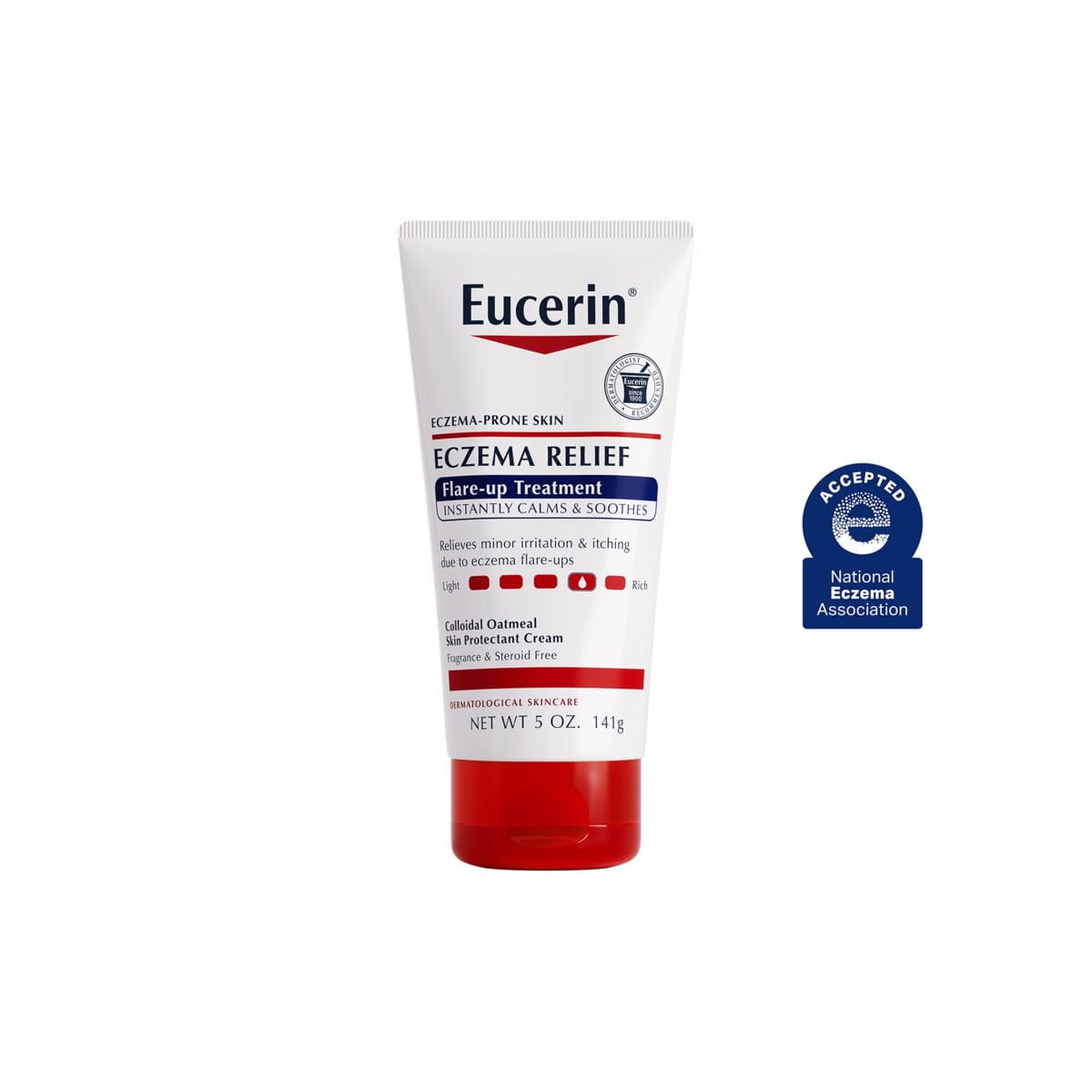
During active eczema flare-ups, use Eucerin Eczema Relief Flare-Up Treatment to soothe skin and relieve itchiness, minor irritation and dryness related to eczema. This eczema flare-up cream with Colloidal oatmeal (skin protectant) instantly calms and soothes skin and can relieve eczema symptoms with regular use. Use as directed.
Thankfully, there are over-the-counter skin care products that can help soothe the itch and dryness that can occur with an eczema flare-up.
During active eczema flare-ups, use Eucerin Eczema Relief Flare-Up Treatment to soothe skin and relieve itchiness, minor irritation and dryness related to eczema. This eczema flare-up cream with Colloidal oatmeal (skin protectant) instantly calms and soothes skin and can relieve eczema symptoms with regular use. Use as directed.
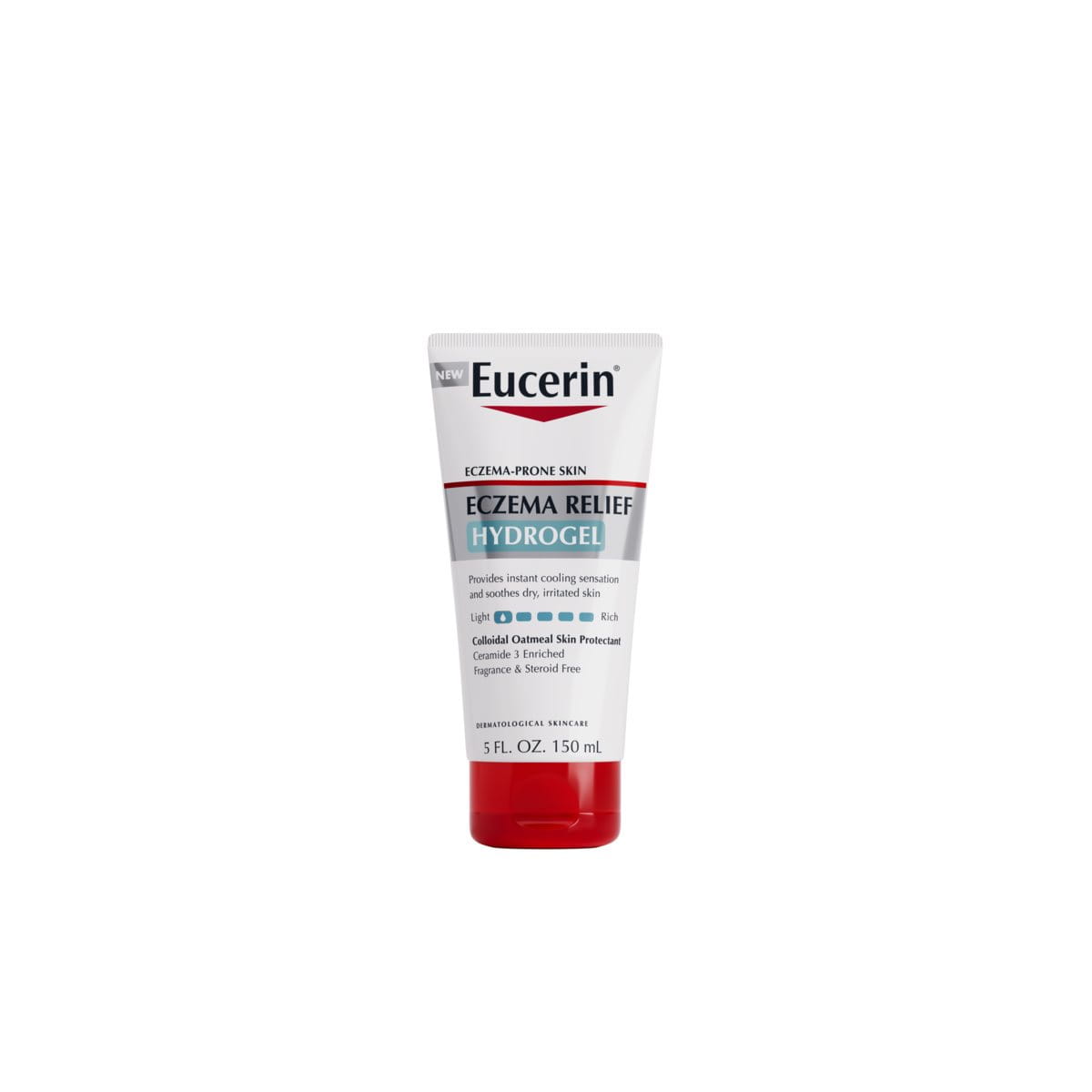
For immediate eczema-related itch relief for up to 12 hours, Eucerin Eczema Relief Hydrogel is a clinically proven formula containing Colloidal Oatmeal (skin protectant), Ceramide-3, Licochalcone A and Hyaluronic Acid that immediately soothes irritation from eczema. This eczema relief gelshelps maintain the skin’s moisture barrier, soothes red, irritated eczema-prone skin, and intensively moisturizes. Appropriate for use on face and body, Eucerin Eczema Relief Hydrogel delivers 48-hour hydration and feels cool when applied.
Daily management of eczema-prone skin with Eucerin
While it’s important to address acute eczema symptoms, it’s also important to support eczema-prone skin during the non-acute phase in order to help reduce the incidence of flare-ups.
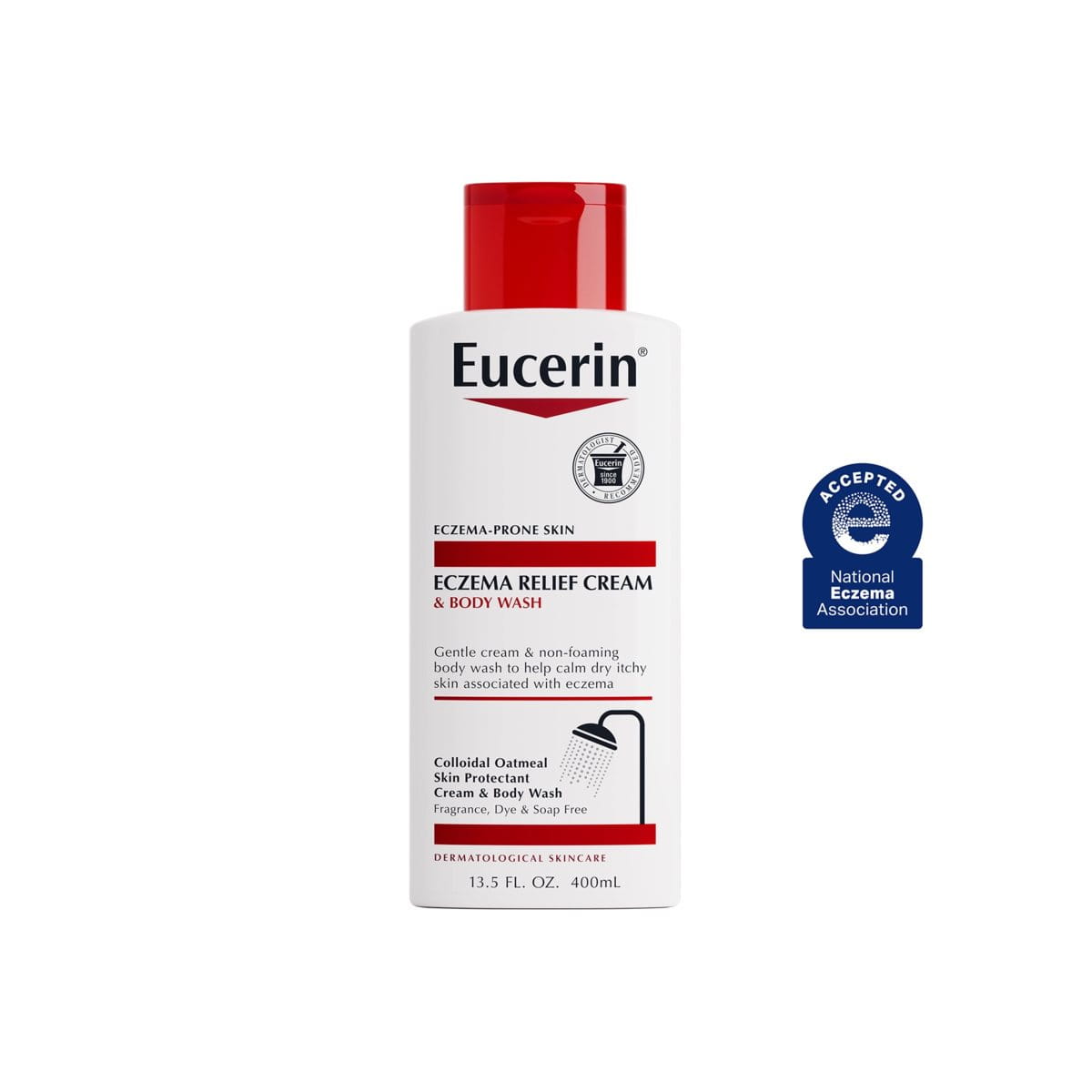
Harsh soaps and heavily fragranced bath products can be an eczema trigger9, so finding a gentle wash appropriate for eczema-prone skin is one helpful way to avoid bath-time triggers. Eucerin Eczema Relief Cream & Body Wash is a gentle, non-foaming body wash that helps calm dry, itchy skin associated with eczema. Enriched with 2% Colloidal Oatmeal (skin protectant) and Ceramide NP, this low-pH cream and body wash is free of soaps, dyes, and fragrances.
Harsh soaps and heavily fragranced bath products can be an eczema trigger9, so finding a gentle wash appropriate for eczema-prone skin is one helpful way to avoid bath-time triggers. Eucerin Eczema Relief Cream & Body Wash is a gentle, non-foaming body wash that helps calm dry, itchy skin associated with eczema. Enriched with 2% Colloidal Oatmeal (skin protectant) and Ceramide NP, this low-pH cream and body wash is free of soaps, dyes, and fragrances.
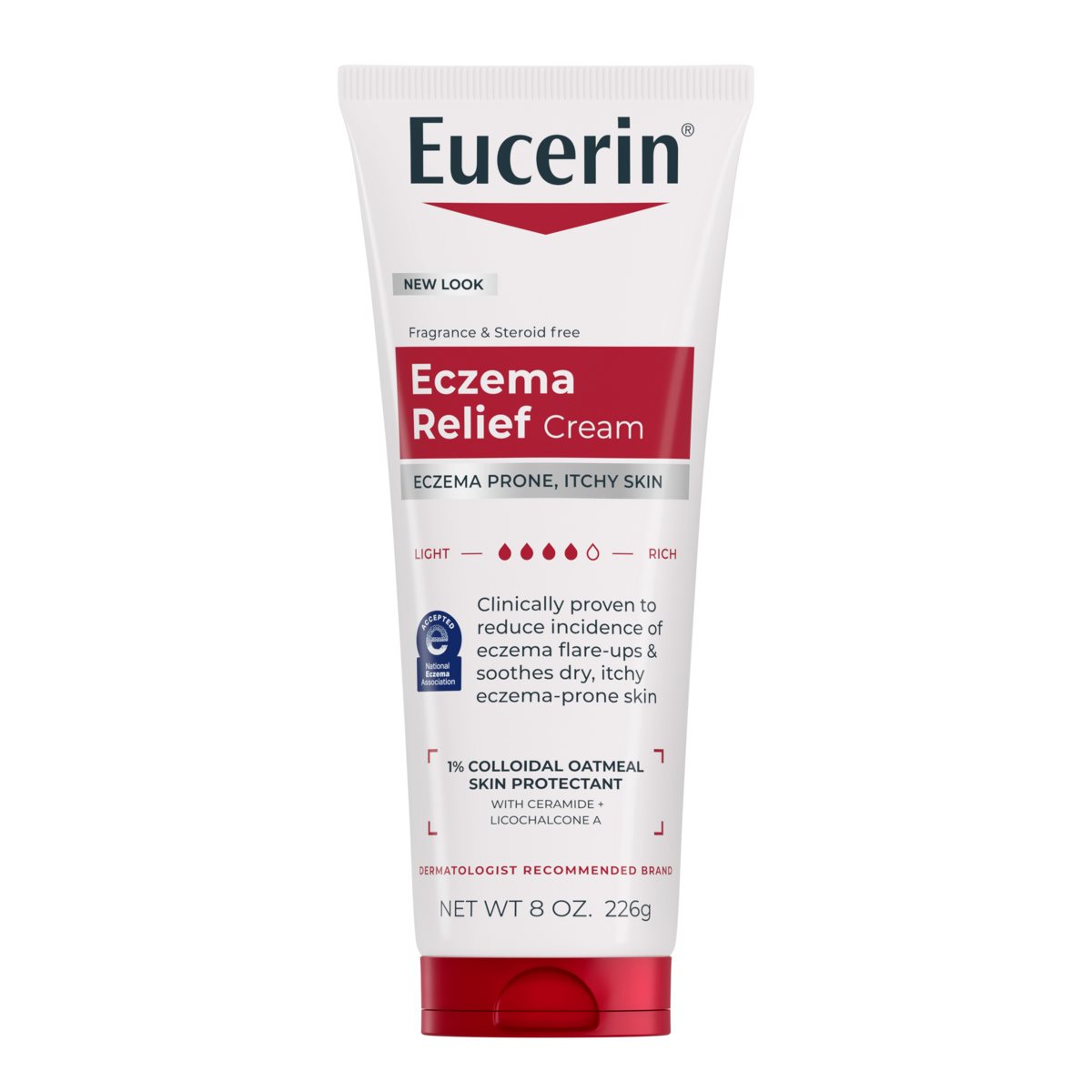
For daily use, try moisturizing Eucerin Eczema Relief Cream with Colloidal oatmeal (skin protectant) to gently and effectively reduce itching, irritation, and dryness due to eczema. Regular usage has been clinically proven to reduce incidence of eczema flare-ups in children. In a clinical study, 4 out of 5 children remained flare-free for 6 months with daily use*. Use as directed.
*Weber TM, et al. J Drugs Dermatol. 2015;14(5):478-485
*Weber TM, et al. J Drugs Dermatol. 2015;14(5):478-485
Making living with eczema more manageable with Eucerin
Eczema and atopic dermatitis are common, but that doesn’t mean they’re not disruptive to daily life or don’t deserve to be taken seriously. The itchiness and discomfort that eczema can cause can greatly affect quality of life, with atopic dermatitis disrupting school and work for nearly a third of the adults who have it10.
Many eczema patients who have moderate atopic dermatitis say that it significantly limits their lifestyle11, and many end up avoiding social engagements and experience negative impacts on their activities because of it. The combination of physical and social discomfort can really take a toll, and at Eucerin, we recognize how important it is to tend to eczema-prone skin so you can comfortably enjoy your life.
If you’re experiencing symptoms of eczema and atopic dermatitis like itching, dry skin, flaky or rough skin, Eucerin’s line of Eczema Relief products for eczema-prone skin are here to help. Whether you’re actively experiencing a flare-up, or want to help reduce the frequency of flare-ups with daily maintenance, there’s a Eucerin eczema relief product for you.
Explore our full line of Eucerin Eczema Relief products.
Many eczema patients who have moderate atopic dermatitis say that it significantly limits their lifestyle11, and many end up avoiding social engagements and experience negative impacts on their activities because of it. The combination of physical and social discomfort can really take a toll, and at Eucerin, we recognize how important it is to tend to eczema-prone skin so you can comfortably enjoy your life.
If you’re experiencing symptoms of eczema and atopic dermatitis like itching, dry skin, flaky or rough skin, Eucerin’s line of Eczema Relief products for eczema-prone skin are here to help. Whether you’re actively experiencing a flare-up, or want to help reduce the frequency of flare-ups with daily maintenance, there’s a Eucerin eczema relief product for you.
Explore our full line of Eucerin Eczema Relief products.
The information provided herein is not intended to be medical advice. Nor is it intended to treat the underlying skin disease or condition. The information is provided solely to:
- Moisturize, soften and smooth dry skin
- Improve the appearance of the skin
- Achieve healthier-looking skin
Sources
- National Eczema Association. What is Eczema? National Eczema Association. https://nationaleczema.org/eczema/.
- Hanifin, J. M.; Reed, M. L. A Population-Based Survey of Eczema Prevalence in the United States. Dermatitis 2007, 18 (2), 82–91. https://doi.org/10.2310/6620.2007.06034.
- National Eczema Association. Eczema Stats. National Eczema Association. https://nationaleczema.org/eczema-facts/.
- Kolb, L.; Ferrer-Bruker, S. J. Atopic Dermatitis. PubMed. https://www.ncbi.nlm.nih.gov/books/NBK448071/.
- 13 Eczema Triggers and How to Avoid Them: Food, Stress, and More. Healthline. https://www.healthline.com/health/severe-eczema/triggers-how-to-avoid.
- What Is Atopic Dermatitis? https://nationaleczema.org/wp-content/uploads/2024/09/NEA_Factsheets_AD101Adults_D01.pdf.
- Eczema on Face: Symptoms, Causes, Types & Treatment. Cleveland Clinic. https://my.clevelandclinic.org/health/diseases/24604-eczema-on-face.
- Itching and Scratching How to Control Eczema-Related Itching Contents. https://eczema.org/wp-content/uploads/Itching-and-Scratching-booklet-2021.pdf.
- Nemeth, V.; Evans, J. Eczema. PubMed. https://www.ncbi.nlm.nih.gov/books/NBK538209/.
- UNDERSTANDING the LIVED EXPERIENCE of ECZEMA the “Voice of the Patient” Report on the Eczema Patient-Focused Drug Development Meeting. https://aafa.org/wp-content/uploads/2022/08/more-than-skin-deep-voice-of-the-patient-report.pdf.
- Silverberg, J. I.; Gelfand, J. M.; Margolis, D. J.; Boguniewicz, M.; Fonacier, L.; Grayson, M. H.; Simpson, E. L.; Ong, P. Y.; Chiesa Fuxench, Z. C. Patient Burden and Quality of Life in Atopic Dermatitis in US Adults. Annals of Allergy, Asthma & Immunology 2018, 121 (3), 340–347. https://doi.org/10.1016/j.anai.2018.07.006.
Our brand values

Pioneers in skincare
We deliver a holistic approach to help keep your skin healthy-looking and radiant.

Committed to innovation
For over 100 years, we have dedicated ourselves to researching and innovating in the field of skin science. We believe in creating active ingredients and soothing formulas with high tolerability that work to help you live your life better each day.

Recommended by dermatologists
We work together with leading dermatologist and pharmacist partners around the world to create innovative and effective skincare products they can trust and recommend.