Eczema in Children – Causes, Treatment, and How to Help Prevent Flare-Ups

11 min read
Show more
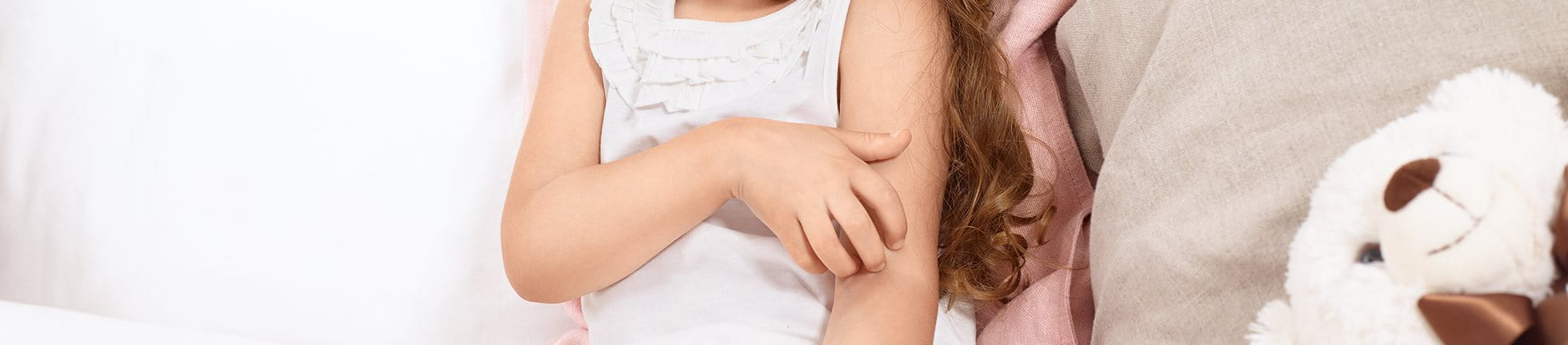
Eczema is the most common skin disease in children, affecting approximately 15% to 20% of children worldwide1. Childhood eczema symptoms − dry, red, itchy and irritated skin2 − can be extremely uncomfortable, causing considerable distress for parents and caregivers too.

While there is no cure for eczema3, this article looks at how the condition affects children and their families. Explore the symptoms, causes and triggers and learn how to treat the symptoms of eczema in children and help avoid flare-ups.

Symptoms of eczema in children

Children can develop eczema at any age, though most sufferers get the disease before they are five4. Eczema in babies is common, usually affecting the forehead, cheeks, or scalp5
 
Between the ages of two and puberty, eczema normally appears as patches of dry, red and itchy skin on the neck, creases of the elbows and knees, and ankles2.  
 
For teenagers, eczema rashes tend to appear in the elbow creases, behind the knees, on the neck, hands, ankles, and the area around the eyes2. Sometimes eczema only appears on a child’s hands3. Skin in the affected areas can thicken and take on a crusty or scaly appearance6. In addition to redness and flaking, skin can also become leathery and may become scarred due to scratching7.

Two phases of eczema

Eczema has two distinct phases:

  • The acute phase when a child's skin flares-up and is at its most irritable. You can read more about this phase in our eczema flare-up article.
  • The non-acute phase between flare-ups where skin looks and feels calmer. You can read more about eczema here.

The acute phase also known as a flare-up can last several days to several weeks8. Your child may be in considerable discomfort, the itching can become so intense that they can’t sleep and the disease can have a considerable impact on their quality of life9. Eczema can also cause significant stress for parents and caregivers who can feel hopeless, guilty, and depressed. 

While many children grow out of eczema by the time they reach puberty, some continue to suffer from atopic eczema as adults10. Research indicates that those who have atopic dermatitis as children can go on to develop other, related conditions like asthma and allergic rhinitis11.

When to see a doctor

If your child’s skin is bothering them, and you are in any way concerned about their symptoms, consult your doctor. They may ask when the symptoms started and how they're impacting your child's everyday life. 
 
Children and teenagers with eczema are prone to skin infections due to scratching itchy skin, and bacteria can make eczema rashes worse2. Always seek medical advice if you notice a sudden change or increased severity of eczema, and if you notice the following symptoms12:

  • Pus-filled bumps
  • Yellow scabs
  • Fever
  • Blisters
  • Pain and swelling
  • Worsening rash that doesn't respond to treatment

What causes eczema in children?

While the causes of eczema are not well understood, it is linked to compromised skin moisture barrier function and an overactive immune system8, among other genetic and environmental factors13.

Genetic disposition

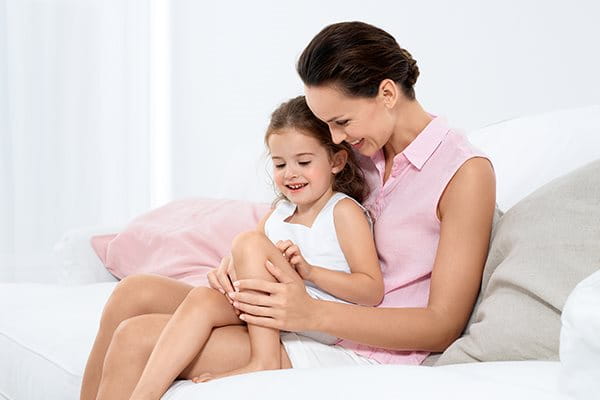
A woman sitting on a bed, gently holding a young child’s leg while they smile together
Those with a family history of eczema are more likely to suffer
Some people have a predisposition for developing eczema, and research has shown that approximately 70% of patients with eczema have a family history of atopic disease such as asthma, atopic dermatitis (a type of eczema), and allergic rhinitis14.

Immune system response

Our immune systems help protect us from illnesses and bacteria, but sometimes the immune system can become overactive or react in an inappropriate way to normally harmless stimuli, causing inflammation in the skin leading to eczema2.

Environmental irritants

Eczema symptoms are triggered when the body’s immune system “switches on” in response to an external stimulus3. In the case of eczema, the immune system can affect the skin moisture barrier’s function and lead to dryness, resulting in eczema’s characteristic itchiness. While each case of eczema is different, common triggers that can lead to flare-ups include things like exposure to pollutants, allergens, detergents or soaps, solvents, and even certain foods13.

Other factors

Child sitting in bed with stuffed animals
Flare-ups of eczema can cause sleepless nights for children
For children that have eczema, other factors can cause or worsen a flare-up such as humidity, changes in temperature, and stress13.

Tips to treat the symptoms of eczema on children

While there is no cure for childhood eczema, the good news is that effective skincare can alleviate much of the discomfort. It’s also important to note that eczema is not contagious3
 
Eczema in children can be treated with gentle, phase-specific care:

  • During the non-acute phase, be sure to use a gentle cleanser and apply regular, effective, and generous moisturization to keep skin soft and supple and help prolong the periods between flare-ups.
  • During eczema flare-ups, use a product designed for eczema-prone skin containing Colloidal Oatmeal skin protectant to help relieve itching and minor irritation caused by eczema. Under the guidance of a pediatrician, the use of prescription ointments and creams may be needed.

The right moisturizing products, and a regular and careful routine, play a key role in protecting and soothing your child’s eczema-prone skin. Avoid fragranced-products, opting for mild, unscented lotions and soap-free cleansers instead.

Childhood eczema symptom relief step 1: Gentle washing

Extended exposure to water, particularly hot water, can promote moisture loss in the skin which can aggravate eczema symptoms, so aim to keep bath time quick and, when your child is old enough, encourage them to take showers instead of baths. Avoid bubble baths, alkaline soaps and harsh surfactants.

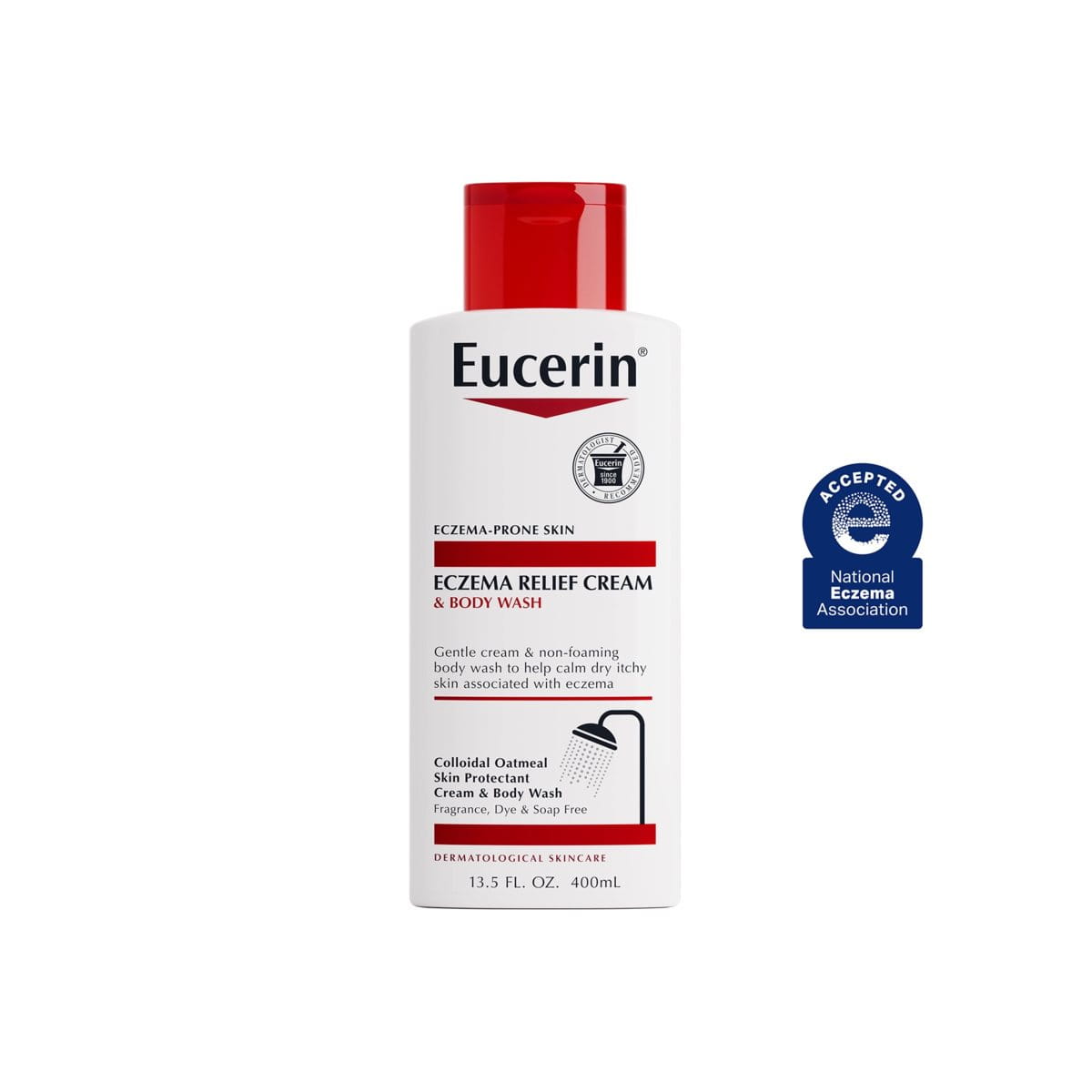
For ages 3 months and up, Eucerin Eczema Relief Cream & Body Wash is a gentle, soap-free cream and body wash offering a formula enriched with 2% Colloidal Oatmeal skin protectant to help calm dry, itchy skin associated with eczema. This non-foaming cleanser is suitable for everyday use and is appropriate for children and adults.

Childhood eczema symptom relief step 2: Moisturizing

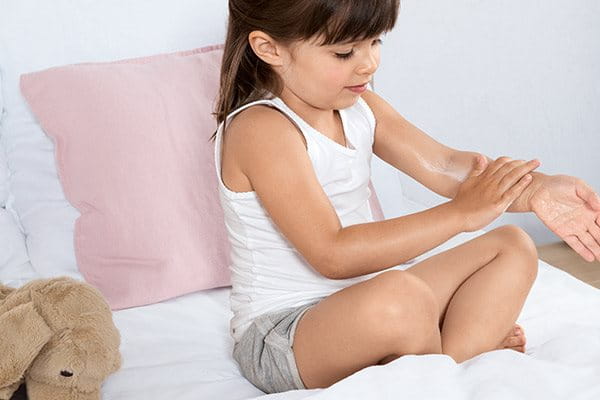
A young child sitting on a bed, rubbing moisturizer onto their hands
Regular moisturization can help to prevent skin from drying out
Effective management of eczema-prone skin rests on the regular and continuous application of moisturizers. We recommend that you moisturize your child’s body at least twice a day. Sensitive eczema-prone areas like their hands and face may need more frequent care.

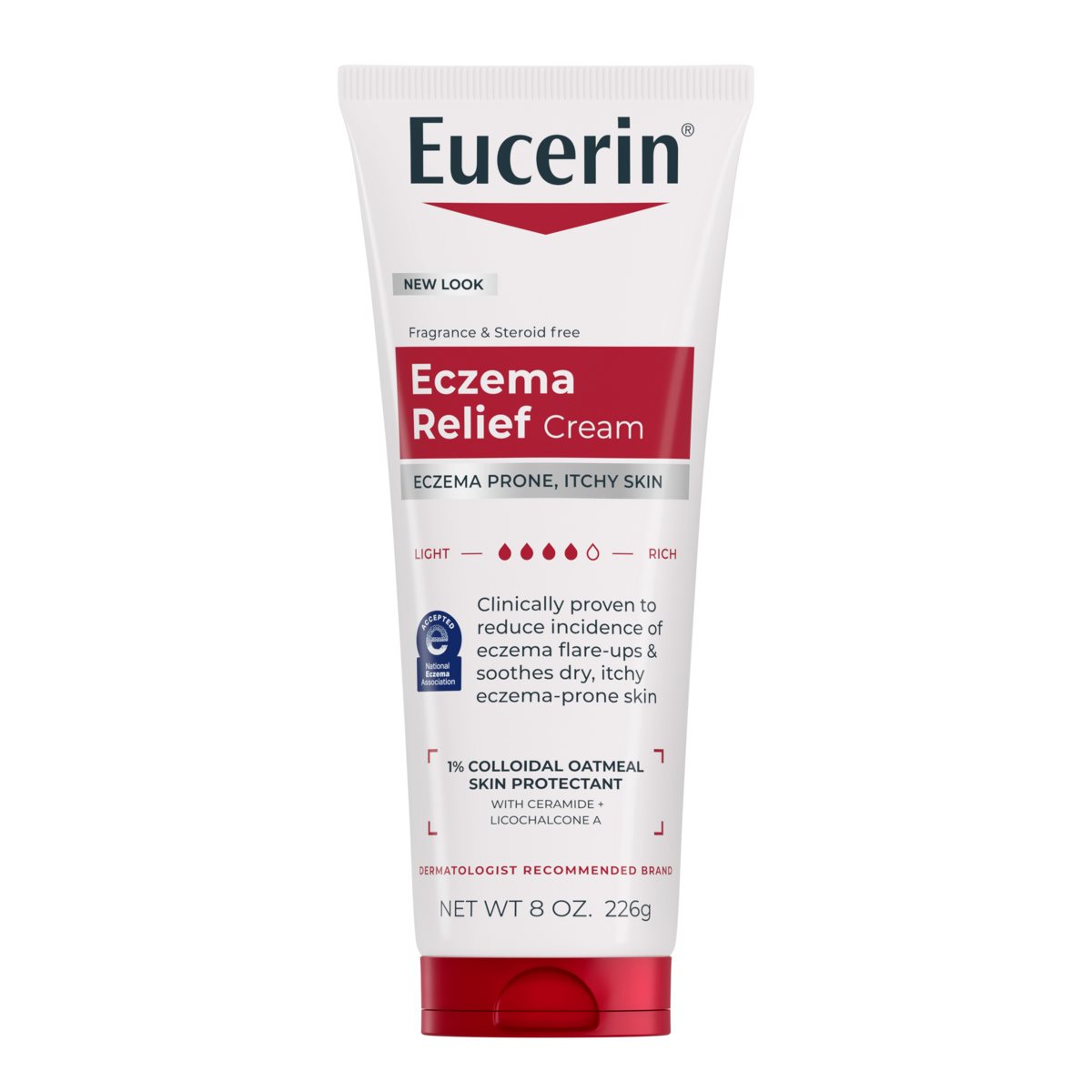
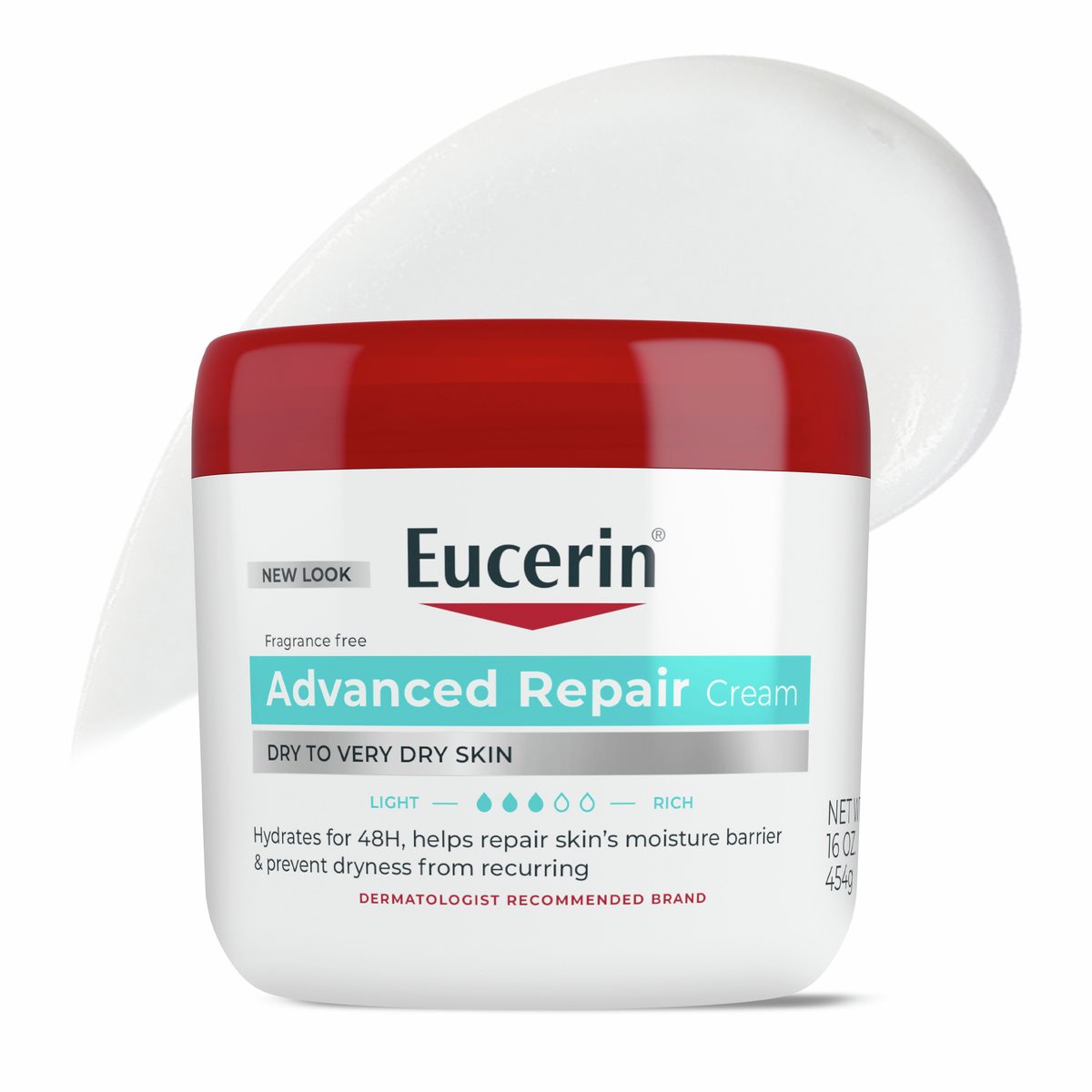
Eucerin Eczema Relief Cream is a daily moisturizer that’s been clinically proven to relieve and fortify dry, itchy, eczema-prone skin. Appropriate for adults, children, and babies 3 months and older, this eczema cream is free of dyes, steroids, parabens, and fragrances, and is non-comedogenic. In a clinical study, 4 out of 5 children remained flare-free for 6 months with daily use.*

* Weber TM, et al. J Drugs Dermatol. 2015;14(5):478-485.

Childhood eczema symptom relief step 3: Soothing flare-ups

When flare-up symptoms happen, your child will want instant relief from the itching and irritation caused by eczema.

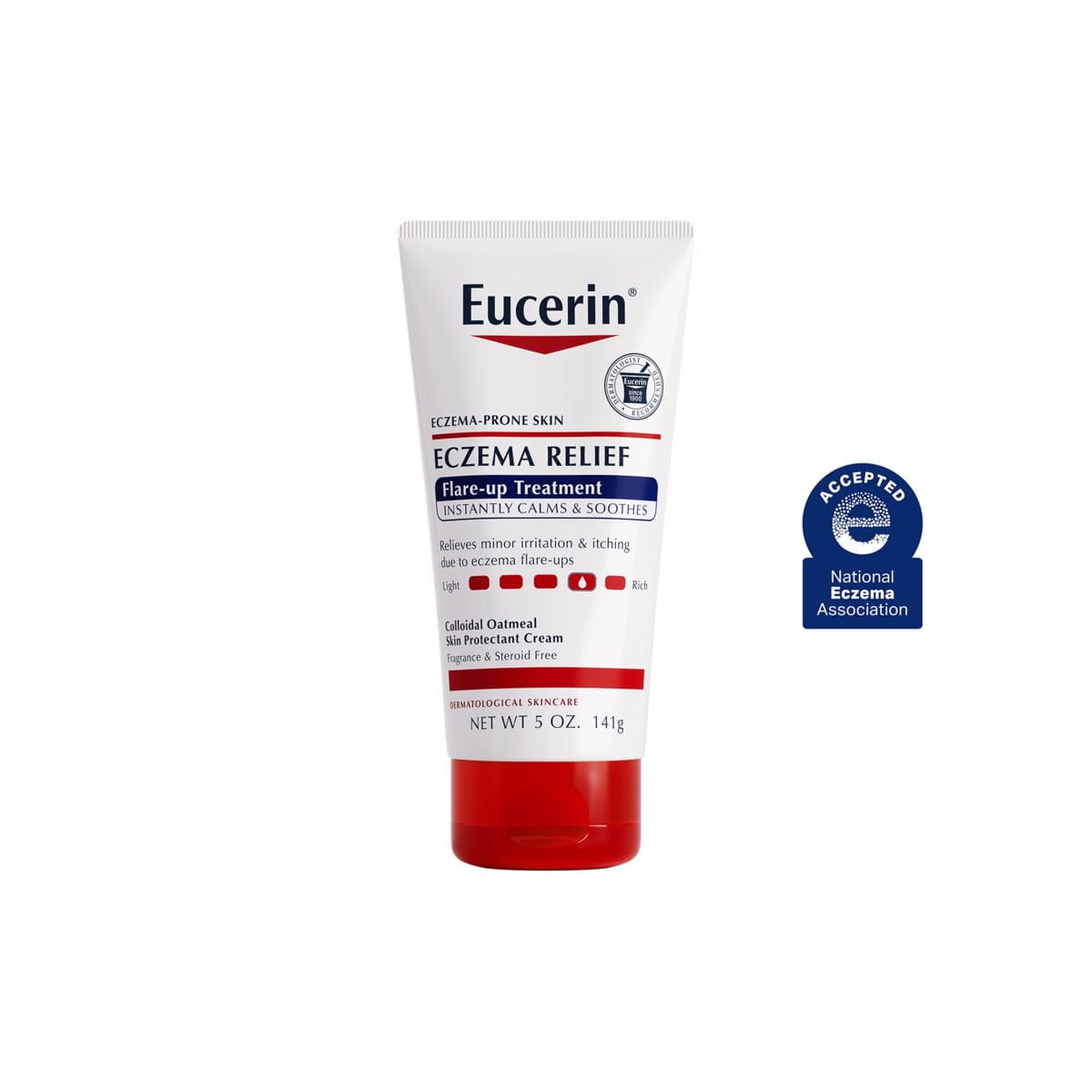
Eucerin Eczema Relief Flare-Up Treatment Immediately soothes itch due to eczema flare-ups. Clinically proven to help relieve itching, dryness, and minor irritations due to eczema, this eczema flare-up cream is accepted by the National Eczema Association. Enriched with Colloidal Oatmeal (skin protectant), Ceramide-3, and Licorice Root Extract, it helps  soothe the symptoms of eczema, Eucerin Eczema Relief Flare-Up Treatment is appropriate for use on infants as young as 3 months and is free of dyes, steroids, fragrances, and parabens.
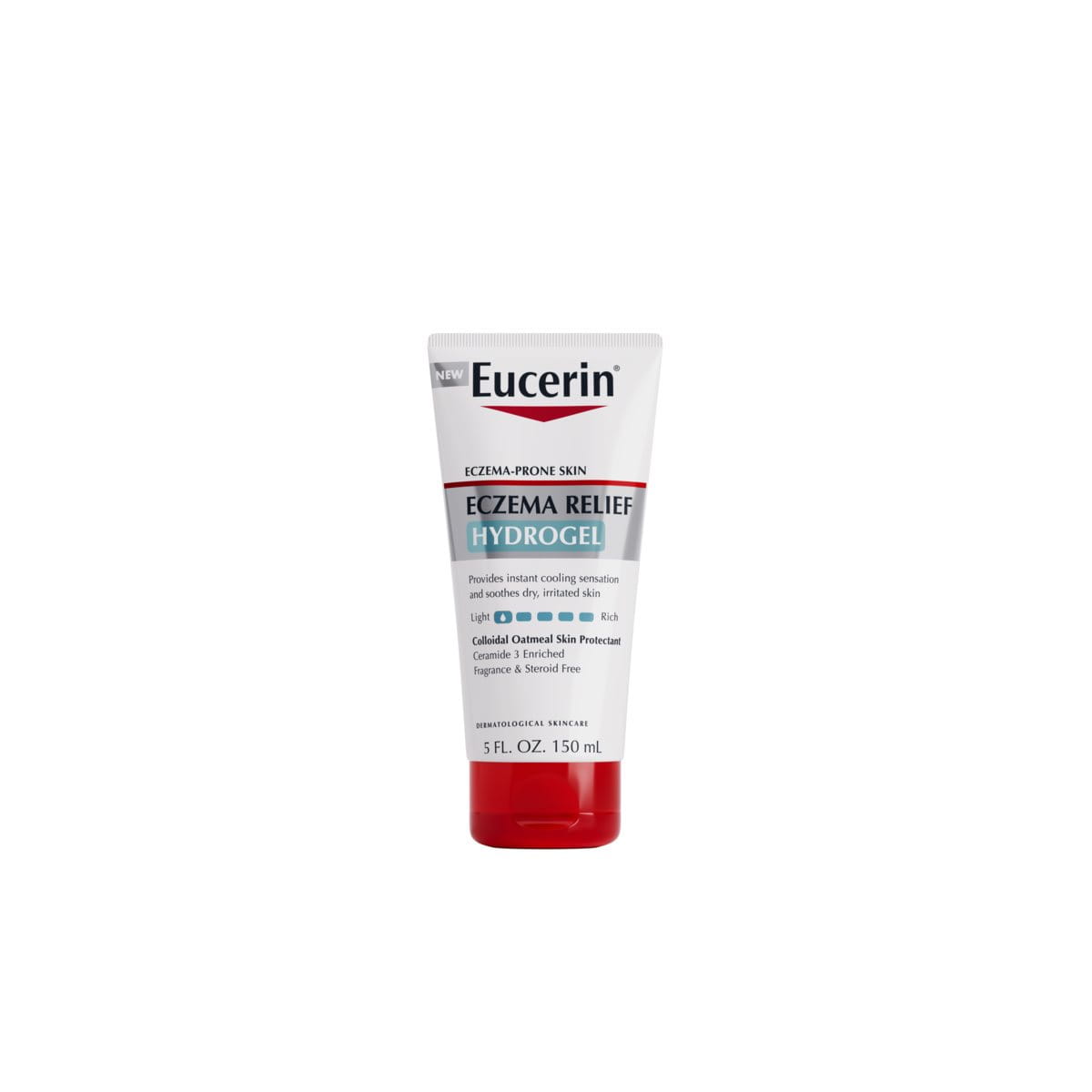
For an ultra-lightweight, fast-absorbing option, try Eucerin Eczema Relief Hydrogel. Eucerin Eczema Relief Hydrogel is clinically proven to immediately soothe irritation from eczema. This eczema gel is appropriate for adults, children, and babies 3 months and older and provides 48-hour hydration while helping to maintain the skin's protective barrier with every use.
For babies under 3 months of age, consult your pediatrician for eczema relief guidance.

How to help prevent childhood eczema flare-ups

Try keeping a record of when your child’s skin flares up and discuss it with your doctor. This will help to identify possible triggers and determine the best treatment.

Everyone is different, but here are some of the things you can do to help reduce the impact of potential triggers:

Don’t smoke near your child

Exposure to secondhand smoke can worsen childhood eczema symptoms15.

Choose gentle, skin-friendly fabrics

Cotton and linen are less abrasive than synthetic fabrics. Avoid scratchy fabrics like rough wool9, and opt for looser-fitting clothing, particularly if warm weather and sweating trigger flare-ups for your child16.

Avoid Allergens

If you think that food is triggering your child’s symptoms, or making their eczema worse, consult your doctor before trying to eliminate any of those possible triggers. It’s important your child gets the nutrients they need to grow and develop. It's also important to identify what environmental allergies may be triggering your child’s flare-ups, such as pollen, dust, or pet dander.

Bathe them in warm, not hot, water

Children should bathe in lukewarm baths or showers and use mild, fragrance-free products like the Eucerin Eczema Relief Cream & Body Wash. Gently pat dry your child's skin after bathing and apply moisturizer immediately afterward.

Reduce the potential damage that scratching can cause

Scratching can exacerbate eczema flare-up symptoms and can also leave skin more vulnerable to infection if skin becomes broken from scratching. Keep your child’s nails short and encourage them to resist scratching7. For young children and babies, you may wish to apply mitts on their hands to help protect their skin from scratching.

Use a humidifier

Having a humidifier in your home or your child’s bedroom can be beneficial to help reduce dryness in the air that can lead to moisture loss in the skin. Be cautious, however, to not make the environment too humid (aim for under 40%), as high humidity can aggravate eczema and can also promote dust mite growth7.

Don't let them overheat

As well as avoiding very hot water, keep your child cool - especially when sleeping. Hot, sweaty skin can cause eczema flare-ups7.

Avoid other environmental triggers

A young child sleeping peacefully while hugging a soft teddy bear
Choose gentle, skin-friendly fabrics that don’t irritate skin
Chemicals found in scented laundry detergents or soaps and solvents can cause eczema symptoms to flare. Opt for unscented laundry detergents and other products for anything that may come in contact with your child’s skin. Look for products that say they are scent-free, safe for sensitive skin, and hypoallergenic on the label.

Eucerin® for eczema in children

Eczema in children can be a source of stress and overwhelm for both children and their caregivers. While there is no cure for eczema, many children do outgrow the condition, though some continue to have eczema symptoms into adulthood. With proper management of symptoms and identification and avoidance of triggers, child eczema can be very manageable.

Eucerin® offers a full line of products to help eczema sufferers from age 3 months to adult find relief from the irritation and itchiness caused by eczema. Eucerin Eczema Relief Cream & Body Wash, Eucerin Eczema Relief Hydrogel, and Eucerin Eczema Relief Cream are recognized and feature the seal of acceptance by the National Eczema Association.

Explore the full line of Eucerin® Eczema Relief products.

Related Products:

The information provided herein is not intended to be medical advice. Nor is it intended to treat the underlying skin disease or condition. The information is provided solely to:

  1. Moisturize, soften and smooth dry skin
  2. Improve the appearance of the skin
  3. Achieve healthier-looking skin

Sources:

  1. Avena-Woods, C. Overview of Atopic Dermatitis. The American Journal of Managed Care 2017, 23 (8 Suppl), S115–S123.
  2. NIAMS. Atopic Dermatitis. National Institute of Arthritis and Musculoskeletal and Skin Diseases. https://www.niams.nih.gov/health-topics/atopic-dermatitis.
  3. Eczema in Children: Causes, symptoms, treatment and more. National Eczema Association. https://nationaleczema.org/children/.
  4. Hon, K.-L.; Yong, V.; Leung, T.-F. Research Statistics in Atopic Eczema: What Disease Is This? Italian Journal of Pediatrics 2012, 38 (1), 26. https://doi.org/10.1186/1824-7288-38-26.
  5. National Eczema Society. Children and eczema. National Eczema Society. https://eczema.org/information-and-advice/information-for-parents-and-children/children-and-eczema/.
  6. NHS . Overview - Atopic Eczema. NHS. https://www.nhs.uk/conditions/atopic-eczema/.
  7. Eczema (Atopic Dermatitis) | Boston Children’s Hospital. www.childrenshospital.org. https://www.childrenshospital.org/conditions/eczema.
  8. What is Eczema? National Eczema Association. https://nationaleczema.org/eczema.
  9. LEWIS-JONES, S. Quality of Life and Childhood Atopic Dermatitis: The Misery of Living with Childhood Eczema. International Journal of Clinical Practice 2006, 60 (8), 984–992. https://doi.org/10.1111/j.1742-1241.2006.01047.x.
  10. Nelson, S. Will My Child Outgrow Atopic Dermatitis? What We Know About Disease Persistence. National Eczema Association. https://nationaleczema.org/blog/atopic-dermatitis-persistence/.
  11. Zheng, T. The Atopic March: Progression from Atopic Dermatitis to Allergic Rhinitis and Asthma. Journal of Clinical & Cellular Immunology 2014, 05 (02). https://doi.org/10.4172/2155-9899.1000202.
  12. Mayo Clinic. Atopic dermatitis (eczema) - Symptoms and causes. Atopic dermatitis (eczema). https://www.mayoclinic.org/diseases-conditions/atopic-dermatitis-eczema/symptoms-causes/syc-20353273.
  13. Nemeth, V.; Evans, J. Eczema. PubMed. https://www.ncbi.nlm.nih.gov/books/NBK538209/.
  14. Wen, H-J.; Chen, P-C.; Chiang, T-L.; Lin, S-J.; Chuang, Y-L.; Guo, Y-L. Predicting Risk for Early Infantile Atopic Dermatitis by Hereditary and Environmental Factors. British Journal of Dermatology 2009, 161 (5), 1166–1172. https://doi.org/10.1111/j.1365-2133.2009.09412.x.
  15. Morales Suárez-Varela, M.; García-Marcos, L.; Kogan, M. D.; Llopis González, A.; Martínez Gimeno, A.; Aguinaga Ontoso, I.; González Díaz, C.; Arnedo Peña, A.; Domínguez Aurrecoechea, B.; Busquets Monge, R. M.; Blanco Quirós, A.; Batlles Garrido, J.; Miner Canflanca, I.; López-Silvarrey Várela, A.; Gimeno Clemente, N. Parents’ Smoking Habit and Prevalence of Atopic Eczema in 6-7 and 13-14 Year-Old Schoolchildren in Spain. ISAAC Phase III. Allergologia et Immunopathologia 2008, 36 (6), 336–342. https://doi.org/10.1016/s0301-0546(08)75866-x.
  16. Clinic, C. Here’s Why Your Eczema Keeps Flaring Up. Cleveland Clinic. https://health.clevelandclinic.org/managing-eczema-flare-ups.

Our brand values

Pioneers in skincare

We deliver a holistic approach to help keep your skin healthy-looking and radiant.

Committed to innovation

For over 100 years, we have dedicated ourselves to researching and innovating in the field of skin science. We believe in creating active ingredients and soothing formulas with high tolerability that work to help you live your life better each day.

Recommended by dermatologists

We work together with leading dermatologist and pharmacist partners around the world to create innovative and effective skincare products they can trust and recommend.

Find a Retailer