
Man smiling and applying sunscreen to his cheekbone while he looks into the camera

Choosing a Sunscreen for Sensitive Skin

7 min read
Show more

If you have sensitive skin, finding the right sunscreen can be a challenge. Some formulas may cause irritation, or discomfort, making daily sun protection difficult to maintain. However, sunscreen is one of the most important steps in a daily skincare routine. Regular sun protection helps protect skin from UV exposure, which can contribute to visible signs of aging and other skin concerns over time1.

Understanding how to identify your sensitive skin and what ingredients to look for can help you choose a sunscreen that works comfortably with your skin.

In this guide, we’ll cover how to recognize sensitive skin, what to look for in a sunscreen, and why mineral sunscreen is often recommended if you have sensitive skin.
What is sensitive skin?

Sensitive skin is a term used to describe skin that is more reactive to environmental factors, skincare products, or certain ingredients2.

People with sensitive skin may experience3:

  • Irritation
  • Skin discomfort
  • Dryness or tightness
  • Skin that reacts easily to new products

These reactions can occur when the skin’s protective moisture barrier becomes disrupted. When the skin barrier is weakened, it may be more likely to react to certain ingredients, fragrances, or environmental stressors.

Because sunscreen is applied daily, and reapplied throughout the day, and often over large areas of skin, choosing a formula designed for sensitive skin can help minimize the likelihood of irritation.

Why sunscreen is important for sensitive skin

Daily sun protection is important for all skin types, including sensitive skin4.

Exposure to the sun’s ultraviolet (UV) rays can contribute to:

These are signs of premature skin aging known as photoaging.

Dermatologists often recommend broad-spectrum sunscreens that protect against both UVA and UVB rays. These formulas help protect skin from both visible sun damage and the effects of UV exposure over time5.

The Eucerin® Sun Protection line includes a range of sunscreens formulated to provide broad-spectrum protection while supporting different skin types and daily skincare needs.

Mineral vs. chemical sunscreen for sensitive skin

When choosing a sunscreen for sensitive skin, it helps to understand the difference between mineral and chemical formulas.

Mineral sunscreen

Mineral sunscreens, sometimes called physical sunscreens, use mineral ingredients such as zinc oxide or titanium dioxide to help protect skin from UV rays6.

These ingredients sit on the surface of the skin and help reflect or scatter UV radiation. Mineral sunscreens are often recommended for sensitive skin because they are generally well tolerated by many skin types and may be less likely to cause irritation for some people7.

For these reasons, mineral sunscreen is commonly recommended for sensitive skin by dermatologists.

Chemical sunscreen

Chemical sunscreens use organic compounds that convert UV rays into heat, which is then released from the skin. While these formulas work well for many people, some individuals with sensitive skin may prefer mineral-based formulas.

What to look for in sunscreen for sensitive skin

If you have sensitive skin, certain features may help you find a sunscreen that works well for you.

Mineral ingredients

Look for formulas containing zinc oxide or titanium dioxide, which are commonly used in mineral sunscreens and are often well tolerated by sensitive skin6.

Fragrance-free formulas

Fragrance can sometimes trigger irritation for people with sensitive skin. Choosing fragrance-free products may help reduce the likelihood of skin irritation8.

Broad-spectrum protection

Broad-spectrum sunscreens protect against both UVA and UVB rays, which is important for comprehensive sun protection9.

SPF 30 or higher

Dermatologists generally recommend using a sunscreen with SPF 30 or higher for daily protection5. All Eucerin® sunscreens meet or exceed SPF 30, with most formulas offering SPF 50.

Eucerin® sunscreens for sensitive skin

Eucerin® offers several sunscreen options designed to provide sun protection while being suitable for sensitive skin.

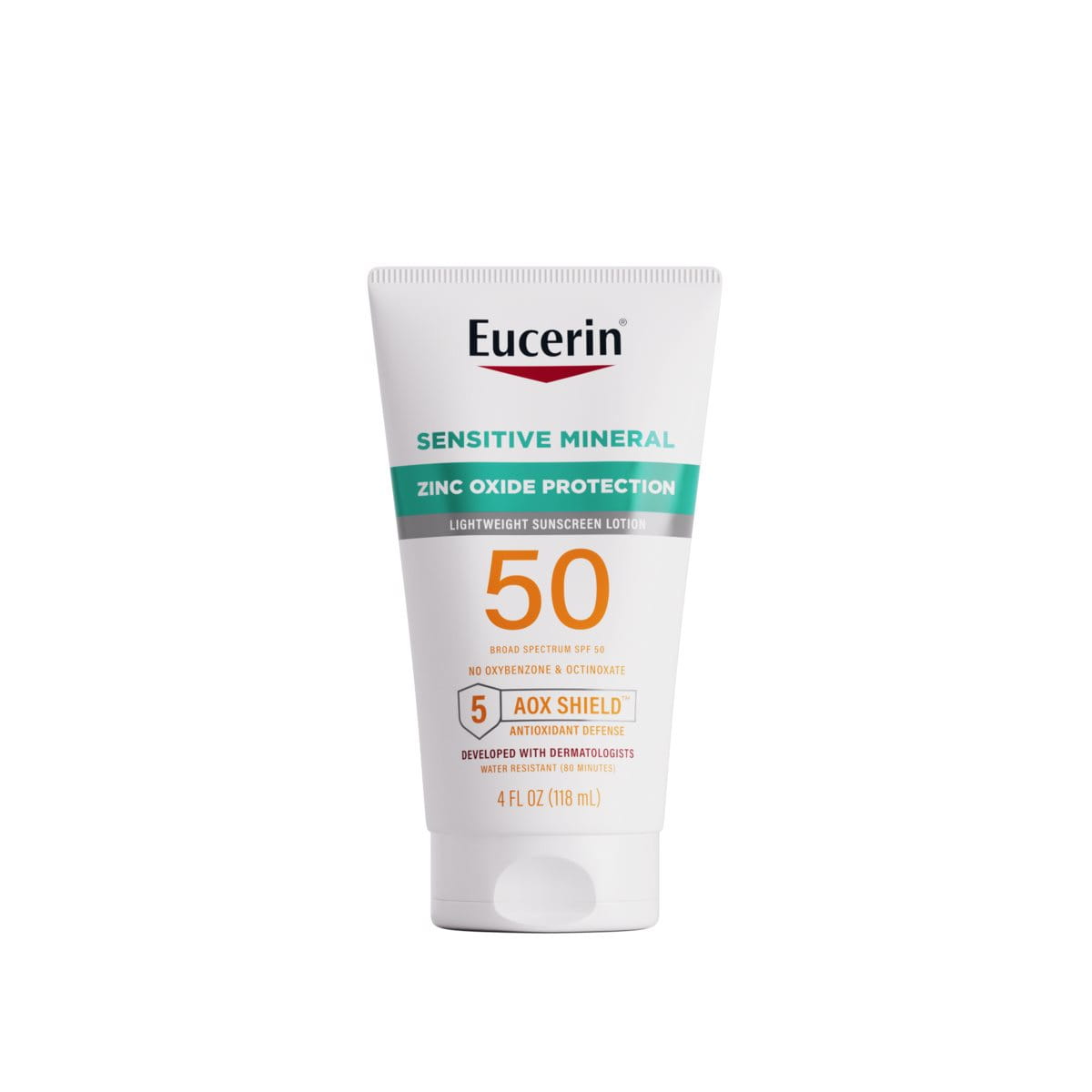
Eucerin® Sensitive Mineral SPF 50 Sunscreen

Eucerin® Sensitive Mineral SPF 50 Sunscreen is formulated with Zinc Oxide mineral filter to help provide broad-spectrum sun protection.

Key features include:

  • Broad-spectrum UVA/UVB SPF 50 sun protection
  • Leaves a light feel on the skin
  • Mineral sunscreen formulated with 100% naturally sourced Zinc Oxide* mineral filter (*Based on zinc oxide active)

This sunscreen is hypoallergenic, suitable for those with sensitive skin, and features UVA/UVB sun protection plus an Advanced Antioxidant Complex, 5 AOX Shield™, that goes beyond neutralizing to also guard from free radicals and help support skin health.

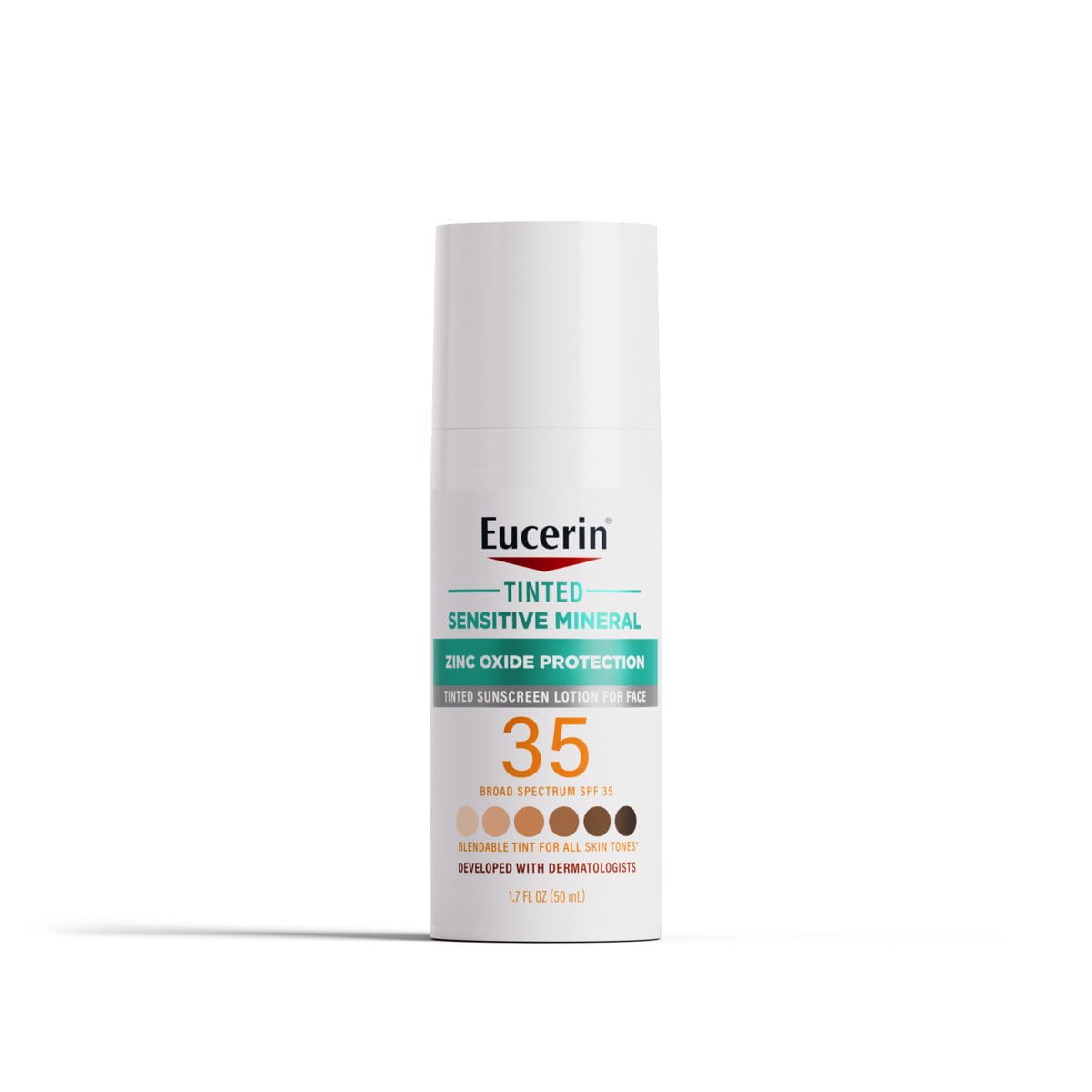
Eucerin® Tinted Sensitive Mineral SPF 35 Face Sunscreen

Tinted sunscreen can help provide sun protection while offering a natural-looking finish.

Eucerin® Tinted Sensitive Mineral SPF 35 Face Sunscreen provides:

  • Broad-spectrum UVA/UVB SPF 35 sun protection
  • A lightweight tinted formula intended for daily use
  • Mineral sunscreen formulated with 100% naturally sourced Zinc Oxide* mineral filter (*Based on zinc oxide active).

Tinted mineral sunscreen may help reduce the appearance of the white cast sometimes associated with mineral formulas. This tinted mineral sunscreen is enriched with 5 antioxidants—our proprietary 5 AOX Shield—to help defend against long-term sun damage. Its lightweight formula is purposefully formulated for daily use alone or under makeup. Use and reapply as directed with other sun protection measures (see Drug Facts Box).

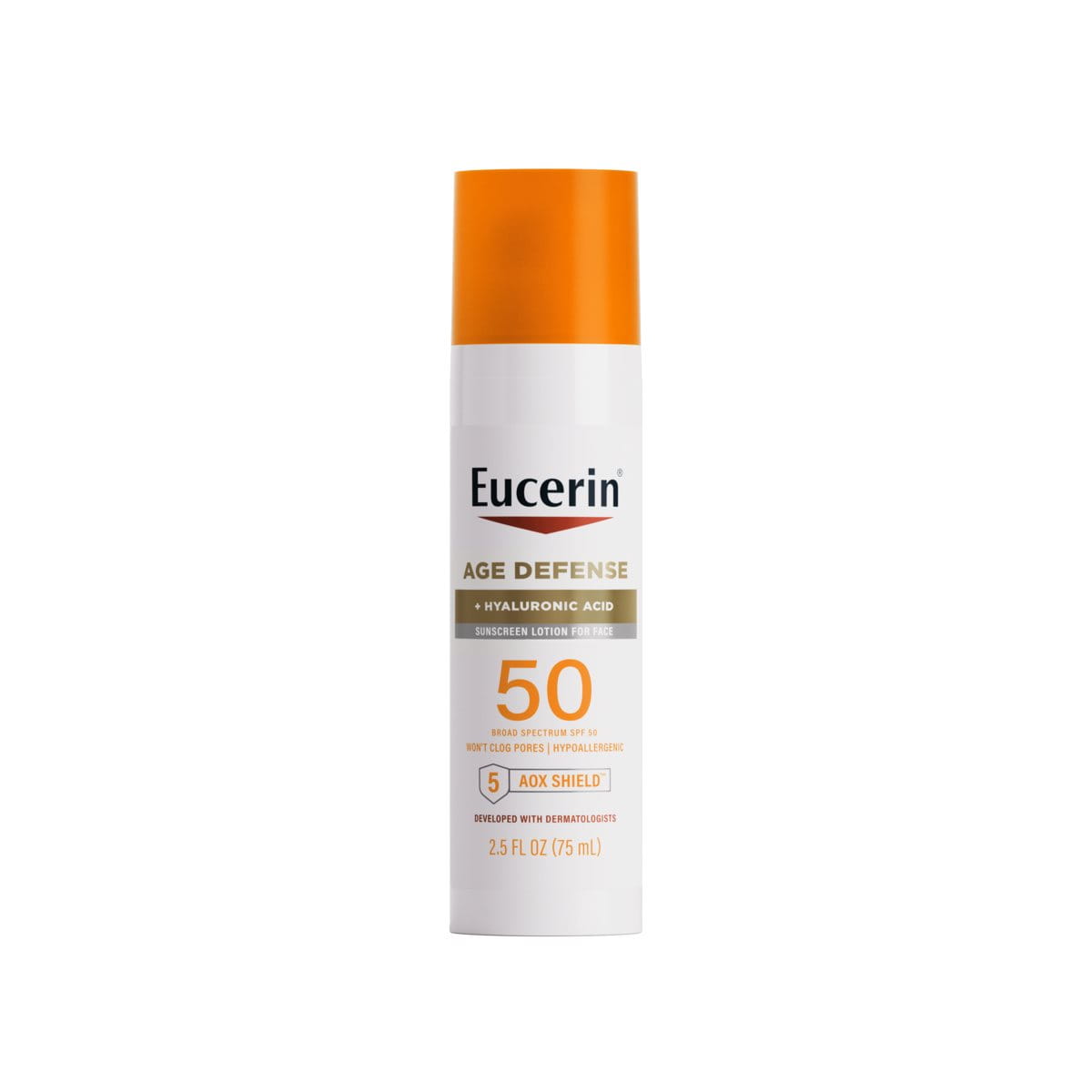
Eucerin® Age Defense SPF 50 Face Sunscreen

Eucerin® Age Defense SPF 50 Face Sunscreen is designed to help protect skin from sun exposure while supporting a daily skincare routine.

This sunscreen includes:

  • Broad-spectrum UVA/UVB SPF 50 protection
  • A lightweight facial formula enriched with Hyaluronic Acid to help visibly reduce the look of fine lines and wrinkles*
  • A formula suitable for daily facial use under makeup

*With continuous use after 1 week.

This facial sunscreen is designed for all skin types, won’t clog pores, and is free of fragrances, dyes, parabens, PABA, phthalates, oxybenzone, and octinoxate.

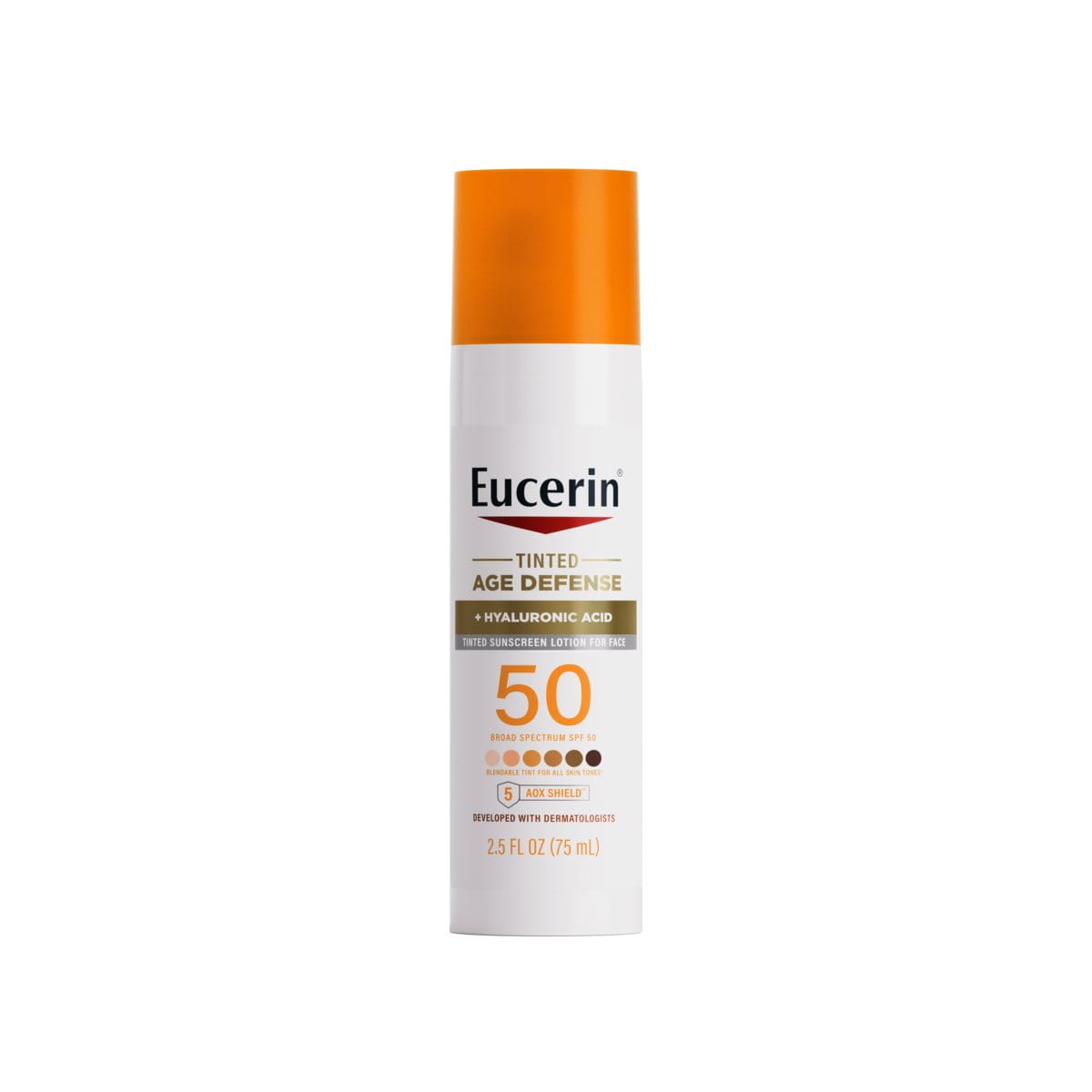
Eucerin® Tinted Age Defense SPF 50 Face Sunscreen

For those who prefer a tinted formula, Eucerin® Tinted Age Defense SPF 50 Face Sunscreen provides the same benefits of Eucerin® Age Defense SPF 50 Sunscreen with a blendable tint.

How to use sunscreen for sensitive skin

Using sunscreen correctly helps ensure consistent protection from the sun’s harmful rays when used in conjunction with other sun protection measures such as wearing protective clothing, avoiding sun exposure during peak hours of the day, and seeking shade when outdoors10.

Dermatologists typically recommend:

  • Applying sunscreen 15 minutes before sun exposure
  • Using enough product to cover all exposed skin
  • Reapplying every two hours, and after swimming or sweating

For more guidance on face sunscreen application, see our article How Much Sunscreen to Use on Your Face.

Help protect sensitive skin from the sun with Eucerin®

Finding the right sunscreen for your skin often comes down to selecting a formula that feels comfortable enough to use every day.

For people with sensitive skin, mineral formulas, fragrance-free options, and lightweight textures may help make sunscreen easier to incorporate into a daily routine.

Explore Eucerin’s full collection of sunscreens to help find the right mineral sunscreen for you.

Explore Eucerin® Sun

Related Product

The information provided herein is not intended to be medical advice. Nor is it intended to treat an underlying skin disease or condition. The information is provided for educational purposes only on the benefits of sunscreen usage.

Sources

  1. Sunscreen FAQs. Aad.org. https://www.aad.org/media/stats-sunscreen.
  2. Skin care tips by type, sun protection tips. Cleveland Clinic. https://my.clevelandclinic.org/health/treatments/21533-skin-care-basics-and-tips.
  3. Sensitive skin. Cleveland Clinic. https://my.clevelandclinic.org/health/diseases/sensitive-skin.
  4. Noble, Dana. How to pick out the best sunscreen for you — Including ingredients to look out for - Mayo Clinic Press. Mayo Clinic Press. https://mcpress.mayoclinic.org/living-well/how-to-pick-out-the-best-sunscreen-for-you-including-ingredients-to-look-out-for/.
  5. How To Pick the Best Sunscreen for Your Skin. Cleveland Clinic. https://health.clevelandclinic.org/how-to-choose-the-best-sunscreen-for-your-skin.
  6. Cleveland Clinic. Mineral vs. Chemical Sunscreen: Which Is Better? Cleveland Clinic. https://health.clevelandclinic.org/mineral-vs-chemical-sunscreen.
  7. The Ultimate Guide to the Best Sunscreens. Healthline. https://www.healthline.com/health/beauty-skin-care/sunscreen-guide.
  8. Gallagher, G. 8 Best Sunscreens For Sensitive Skin. Healthline. https://www.healthline.com/health/sunscreen-for-sensitive-skin.
  9. Skin Care Tips by Type, Sun Protection Tips. Cleveland Clinic. https://my.clevelandclinic.org/health/treatments/21533-skin-care-basics-and-tips.
  10. American Academy of Dermatology Association. How to apply sunscreen. www.aad.org. https://www.aad.org/public/everyday-care/sun-protection/shade-clothing-sunscreen/how-to-apply-sunscreen.

Related Articles

Find a Retailer