
Over time, your skin tells a story, especially in areas like the legs that see years of sun exposure1. If you’re noticing skin discoloration or uneven-looking skin, you’re not alone. In this guide, we’ll explore what may be contributing to skin discoloration on the legs and how Eucerin® Radiant Tone can help reduce the appearance of dark spots to support more even-looking, radiant skin.
What does skin discoloration on the legs look like?
Skin discoloration on legs often shows up as areas of uneven-looking tone. It may look like dark spots that stand out from the surrounding skin, especially in bright light or after time in the sun2.
Common signs include1:
- Flat brown or darker-looking spots
- Areas of uneven tone
- Skin that looks dull in certain areas compared to the rest of the leg
- Spots that appear more noticeable after sun exposure
When to speak to a professional about skin discoloration on the legs
Skin discoloration on the legs is often cosmetic. However, if you notice:
- Changes in size or color
- Raised or textured spots
- Discoloration accompanied by discomfort
It’s important to consult a board-certified dermatologist for further guidance3.
What causes skin discoloration on the legs?
Several everyday factors can contribute to skin discoloration on legs. Over time, visible changes in skin tone can develop gradually, often without you noticing right away.
Sun Exposure:
Sun exposure is one of the most common contributors of uneven skin tone2. The legs are frequently exposed to UV rays during outdoor activities — especially in warmer months when wearing shorts, skirts, or bathing suits.
Even occasional sun exposure over the years can make discoloration on the lower legs more noticeable. Supporting your skin with daily sun protection and a consistent body care routine can help maintain a more even-looking appearance4.
Aging:
As skin ages, it can naturally start to look less even in skin tone. With ongoing exposure to the elements, discoloration may become more noticeable. It is also possible that your skin may appear duller, less even in tone, and more prone to visible dark spots5.
Imperfections:
Dark spots due to imperfections can also contribute to skin discoloration on the legs. These may develop after minor surface-level skin concerns and can leave behind areas that appear darker than the surrounding skin.
Skin discoloration on arms and other areas
Although this article focuses on skin discoloration on legs, uneven skin tone can also appear on:
- Arms
- Hands
- Shoulders
These areas are also frequently exposed to the sun and may show visible dark spots due to the sun, and imperfections6.
How to help reduce the appearance of skin discoloration on legs
While discoloration can’t always be prevented entirely, a consistent skin care routine can help support more even-looking skin over time.
Use daily sun protection
UV exposure is one of the most common contributors to visible dark spots. Applying a broad-spectrum sunscreen to the exposed areas of the legs can help protect against further sun-related discoloration, which can be one symptom of photoaging4. Combine daily sunscreen use with other sun protection measures like wearing protective clothing and seeking shade during peak hours of the day.
Maintain a consistent moisturizing routine
Keeping the skin well-moisturized helps support smoother, healthy-looking skin4
When choosing a body moisturizer for uneven skin tone, look for body care products designed to help reduce the appearance of dark spots while helping hydrate and nourish the skin.
Frequently asked questions (3)
-
Can skin discoloration also appear on arms?
Yes, uneven tone can also appear on the arms, hands, and shoulders. These areas often experience similar sun exposure as the legs1. Supporting these areas with sun protection and suitable skin care can help promote a more even-looking tone. -
Can skin discoloration on legs become more noticeable over time?
Yes, skin discoloration on legs can become more noticeable gradually. Ongoing sun exposure and visible signs of aging may make uneven tone or dark spots stand out more than they once did3. -
How long does it take to see improvement in uneven-looking skin tone on the body?
Results can vary depending on your skin type and routine2. With Eucerin® Radiant Tone products for the body, formulated with Thiamidol, with consistent daily use, skin becomes more radiant in as little as 2 weeks. Consistency, along with daily sun protection, is key to maintaining even, radiant-looking skin.
Manage uneven skin tone with Eucerin® Radiant Tone
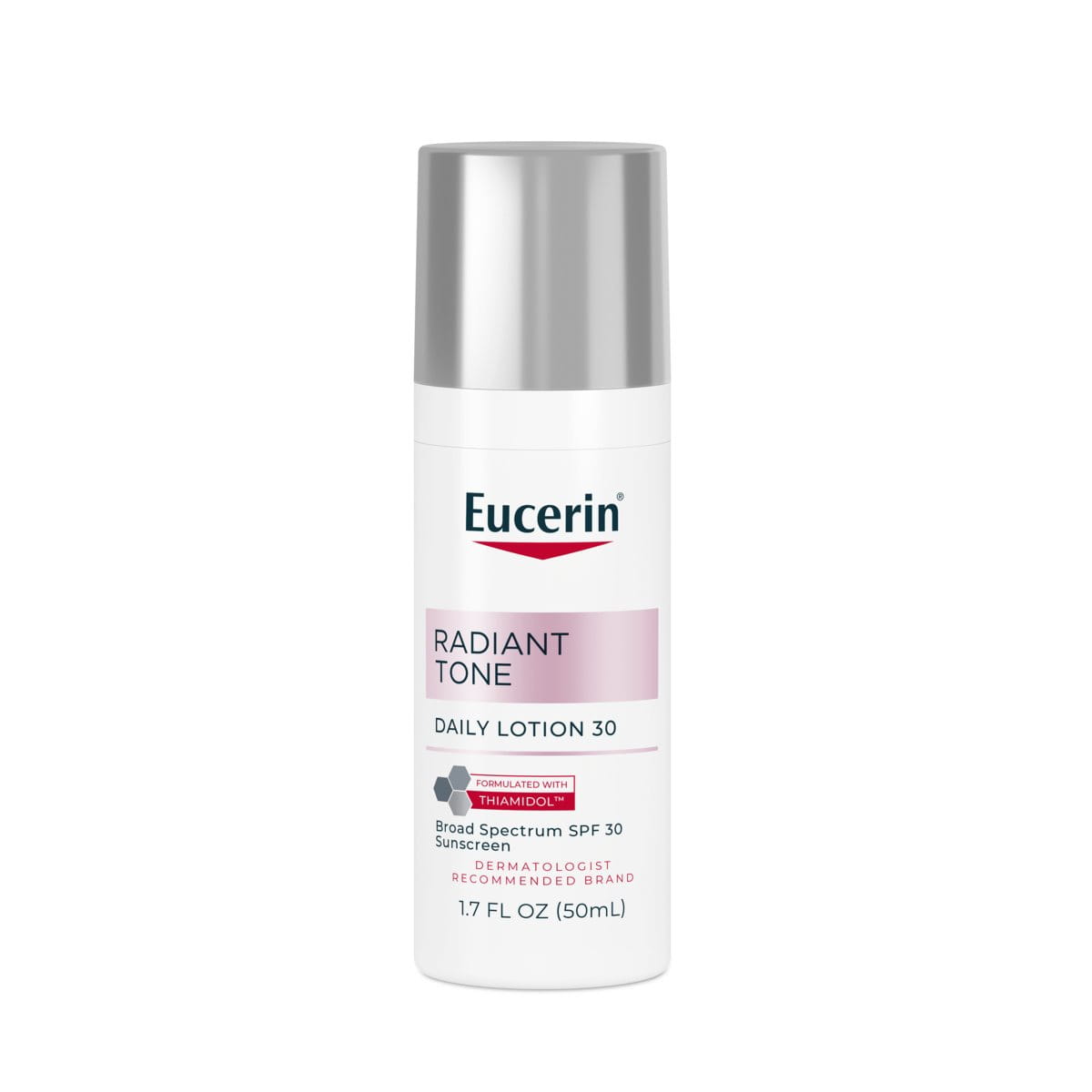
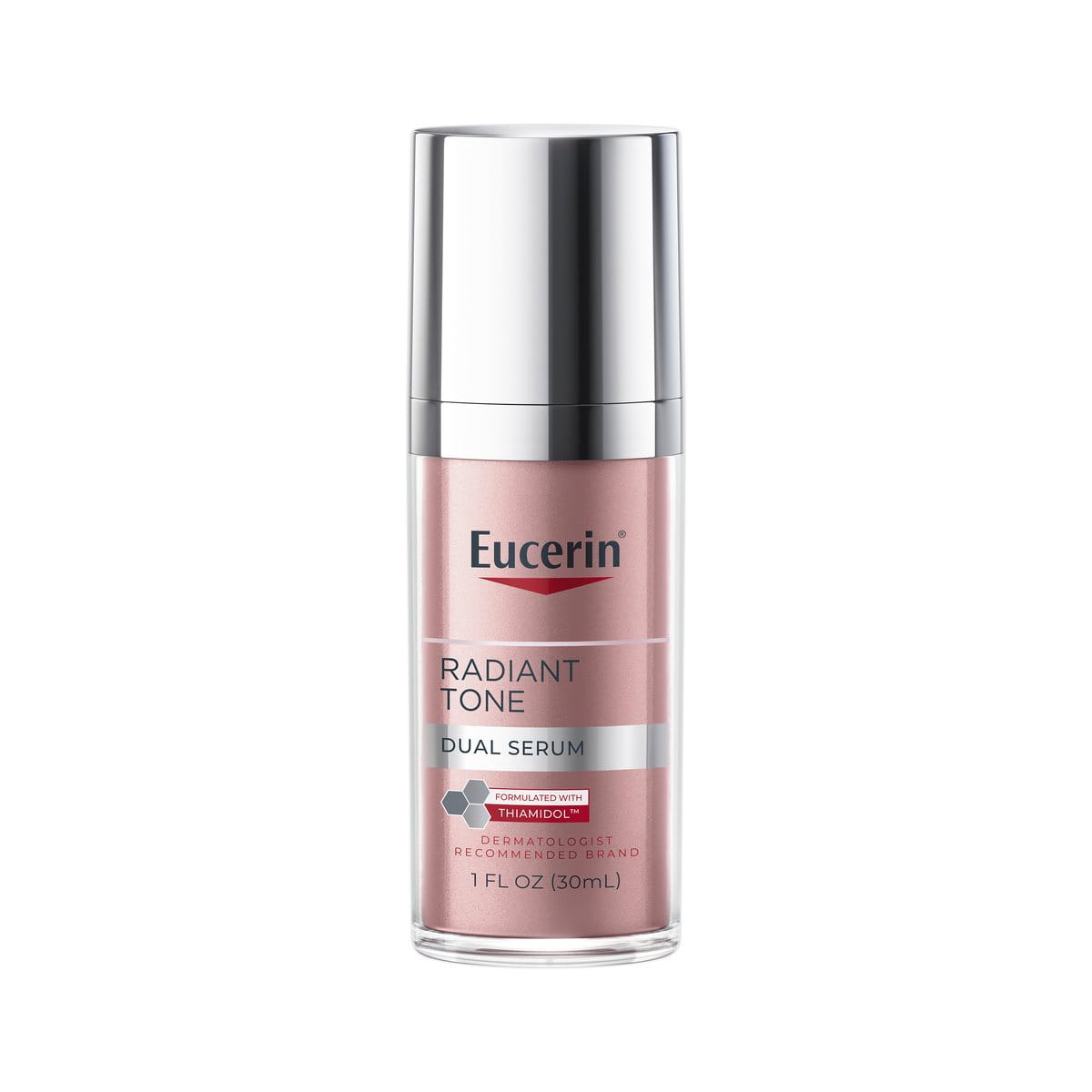
Uniquely formulated with Thiamidol, Radiant Tone products can help visibly reduce the look of persistent dark spots due to sunlight exposure and aging with regular use.* With products for both body and face, Eucerin® Radiant Tone can help support even, smooth, radiant-looking skin anywhere you may be experiencing uneven skin tone.
*Excludes Radiant Tone Cleansing Gel and Radiant Tone Eye Cream.
When used as directed, Radiant Tone products can help:
- Improve the look of uneven skin tone
- Reduce the appearance of dark spots caused by due to sunlight exposure and aging
- Support radiant-looking skin
Eucerin® Radiant Tone Dark Spot Corrector Body Lotion and Eucerin® Radiant Tone Dark Spot Corrector Body Cream are part of the Radiant Tone Body line, designed to help reduce the appearance of dark spots due to sunlight exposure and aging with regular use.
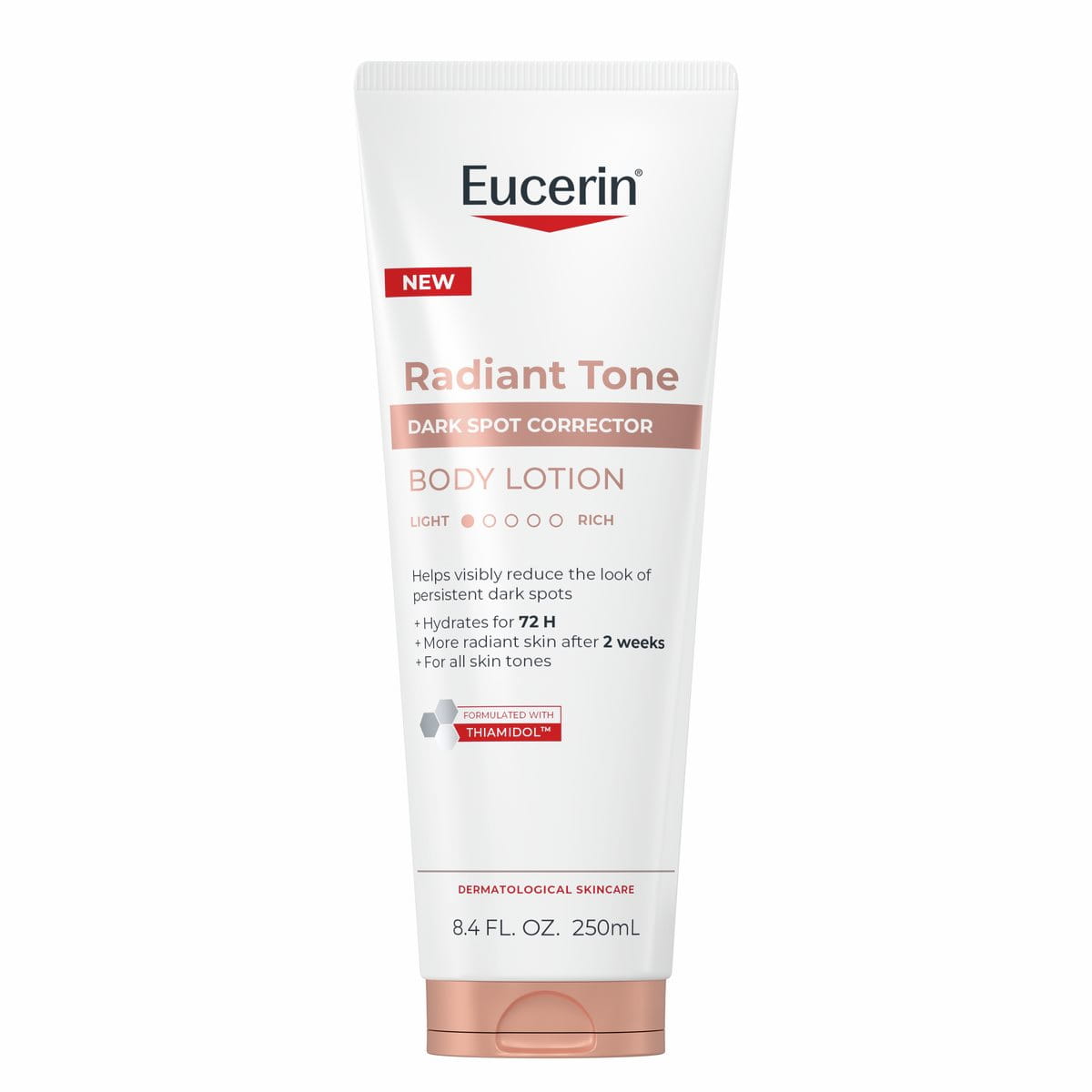
Formulated with Thiamidol, Hyaluronic Acid, and Antioxidant Licochalcone A, Eucerin Radiant Tone Dark Spot Corrector Body Lotion improves skin’s radiance in as little as 2 weeks and visibly reduces the look of persistent dark spots over time with regular use*. This daily moisturizing body lotion has a clinically proven formula, is suitable for all skin tones and provides 72-hour hydration with a fast-absorbing, non-greasy texture. This body lotion is paraben free and dye free.
*Visibly reduces the look of dark spots due to sun exposure and aging with regular use. Use as directed.
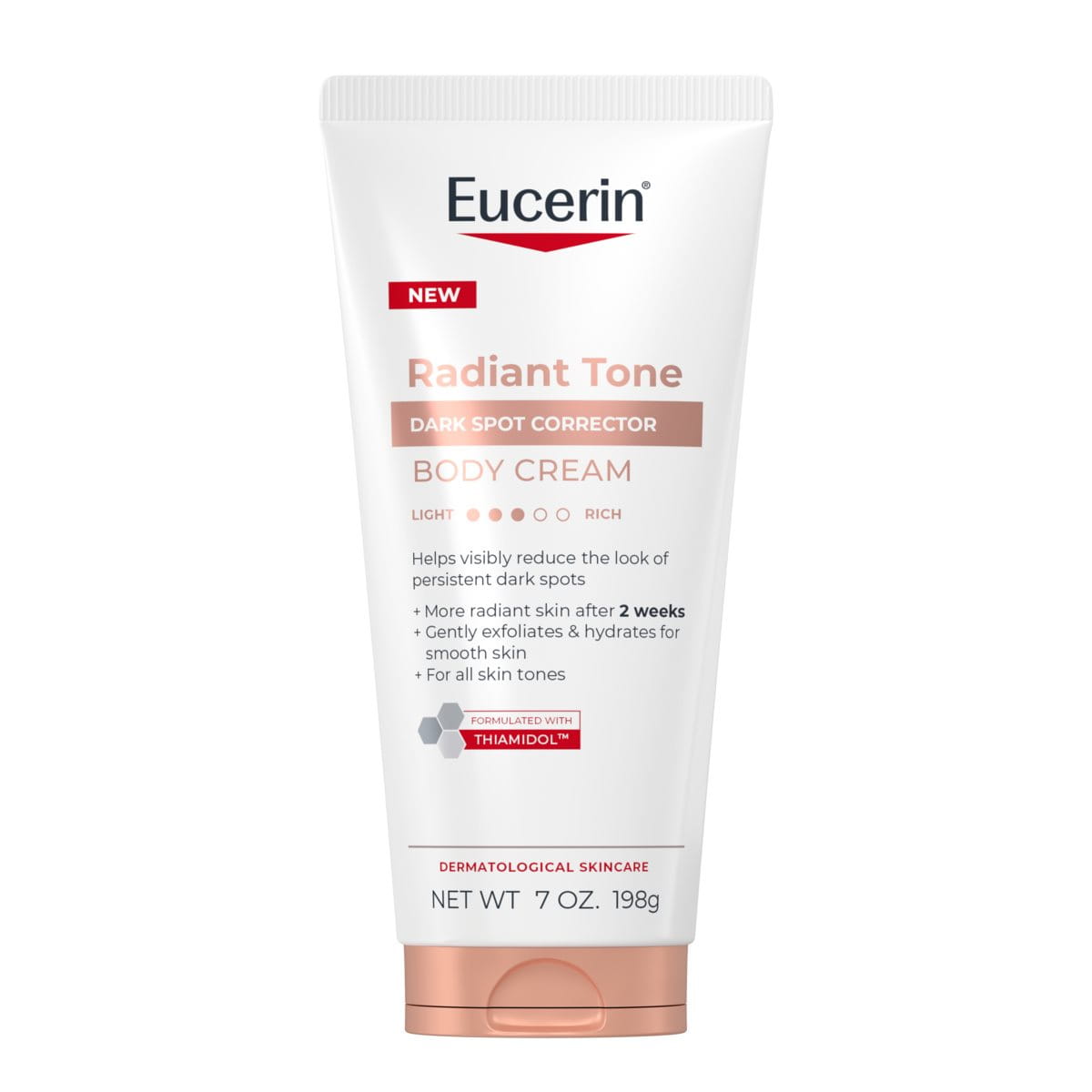
For a fast-absorbing, lightweight body cream, try Eucerin® Radiant Tone Dark Spot Corrector Body Cream. Formulated with Thiamidol, this body cream effectively reduces the appearance of dark spots due sunlight exposure and aging with regular use*. Its formula with Lactic Acid, Hyaluronic Acid & Vitamin B5 gently exfoliates the skin while providing 72-hour hydration. Skin looks more even and revitalized . This body cream is suitable for daily use on all skin types.
*With regular use. Use as directed.
Explore all products in the Radiant Tone product line. Limit the use of Radiant Tone face products to 4 times a day. For best skin compatibility, use products from the Radiant Tone collection. Radiant Tone products are not recommended for individuals who regularly perform facial hair removal including shaving. Limit the use of Radiant Tone body products to 2 times a day.
For more information about Face products formulated with Thiamidol and how to incorporate them into your routine, read our article: Radiant Tone Products Formulated with Thiamidol.
The information provided herein is not intended to be medical advice. Nor is it intended to treat the underlying skin disease or condition. The information is provided solely to:
- Moisturize, soften and smooth dry skin
- Improve the appearance of the skin
- Achieve healthier-looking skin
Sources
- Skin Discoloration: Causes, Conditions & Treatments. Cleveland Clinic. https://my.clevelandclinic.org/health/symptoms/11014-skin-discoloration.
- Pietrangelo, A. What Causes Dark Spots on Your Legs and How Can You Treat Them? Healthline. https://www.healthline.com/health/symptom/dark-spots-on-legs.
- Hyperpigmentation: Age Spots, Sun Spots & Liver Spots. Cleveland Clinic. https://my.clevelandclinic.org/health/diseases/21885-hyperpigmentation.
- How to fade dark spots in skin of color. www.aad.org. https://www.aad.org/public/everyday-care/skin-care-secrets/routine/fade-dark-spots.
- Mayo Clinic. Age spots (liver spots) - Symptoms and causes. Mayo Clinic. https://www.mayoclinic.org/diseases-conditions/age-spots/symptoms-causes/syc-20355859.
- Case-Lo, C. Discolored Skin Patches. Healthline.https://www.healthline.com/health/discolored-skin-patches.